Sharing
How to Teach a Toddler to Share: 5 Gentle Ways

By Dao, Founder · PhD in mathematics, former Director of Data Science at Uber and Capital One · LinkedIn ↗
The short version
- A toddler who won’t share isn’t being naughty — real, generous sharing simply doesn’t click until about three and a half.
- What you can teach now is taking turns, one short coached turn at a time — not generosity.
- What helps most: let a timer or song own the turn, coach “use your words,” praise the turn-taking, and expect backslides for years.
- A personalized story where your child is the hero teaches sharing without ever feeling like a lecture — and works best read together with you.
If snack keeps ending in “MINE!” and tears — breathe. Your toddler isn’t being naughty, and you’re not doing anything wrong. Real, generous sharing doesn’t click until about three and a half, so generosity isn’t the goal yet. Taking turns is — and that, they can learn. Here’s what’s normal by age, and how to help.
Here’s the relief: a two-year-old clutching the truck literally can’t hold the idea of sharing in their head yet. That’s not a flaw, it’s their age. What you can teach, starting now, is taking turns, one short turn at a time.
Part of our guide to social-emotional skills by age.
What’s normal at 2–3
They can’t really share yet, and that’s on schedule.
At around two and a half, most kids play next to other children and only sometimes with them, so side-by-side play is right on track. True sharing doesn’t fit in their heads yet. A grown-up nearby to lend the words is the whole job here. [1, 3]
Try this: Aim for short turns, not generosity. A timer or a song can own the turn (“your turn until the song ends”), and keep a duplicate toy handy so two kids aren’t fighting over one.
What’s normal at 3–4
The first real turns.
Around three, kids get noticeably less “me, me, me,” start truly playing with other children, and can take turns and trade toys when a grown-up is close by to coach. [2]
Try this: Use a simple, fair script: “when you share a toy, each of you gets an equal turn.” Coach “use your words” instead of grabbing.
What’s normal at 4–5
Reliable turn-taking, with backslides.
By five, most kids can follow rules and take turns in a game. But genuinely fair, generous sharing — giving something up even when it costs them — keeps strengthening all the way to seven or eight. So wonderful turn-taking with the occasional “but I had it first!” is exactly what to expect. [4, 5]
Try this: Let them help solve the squabble, and praise the turn-taking itself: “you gave Mia a turn — look how happy that made her.”
How to help (what actually works)
- Reframe “sharing” as “taking turns.” Forcing a toddler to hand a toy over teaches obedience, not sharing. Short, coached turns are the realistic, learnable skill at this age. [1, 5]
- Let a timer or a song own the turn, not you. It takes you out of the referee role and makes the hand-off feel fair instead of like a punishment. [2]
- Coach the talk, not the lecture. Asking “how do you think she feels?” does more to grow sharing than telling them to share — getting kids to talk about feelings predicts sharing better than labeling feelings for them. [7]
- Praise the turn, not the child, and model it yourself: “Can I have a turn with the crayon? … Thank you!” [2]
- Expect backslides, and don’t panic. Giving up something they actually want is the hardest kind of sharing, and it keeps developing for years — this is a long game, not a one-and-done lesson. [5, 6]
See how the story turns “mine” into “ours”
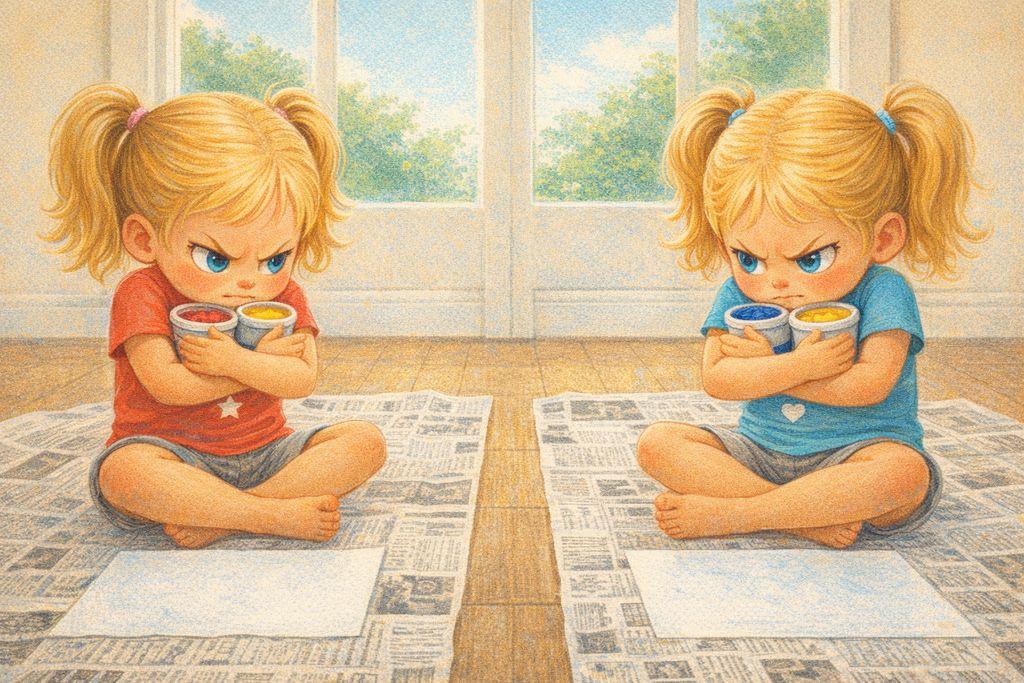



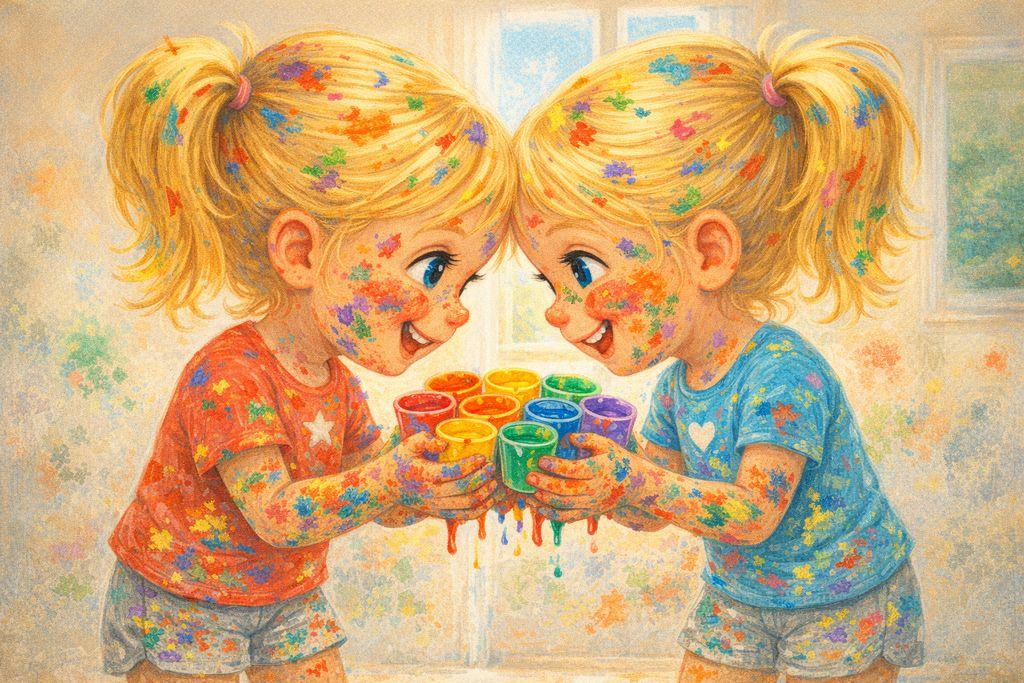

What this story is built to help with: A personalized storybook is the perfect way to teach it — your child as the hero who names the frustration of wanting it all, discovers that sharing makes more (not less), and feels the joy of building something together, rehearsed on the page before the real sandbox test.
Can a story actually help? (More than you’d think)
Here’s why a personalized story works so well: it’s teaching that never feels like teaching. Your child isn’t being told to share — they’re living it through a hero they love, trying the skill on in a story before they ever need it for real. A child pays far more attention to a story they’re in, so it goes in. [8]
And the skill is only one of the gifts. Watching themselves go from “MINE!” to “want to build it together?” on the page rehearses the exact mindset shift sharing asks for — long before the real sandbox test. Reading it side by side is pure bonding, and it’s theirs to keep: a little guide they reach for whenever a turn feels hard.
It works best as part of your toolkit — you make the lesson land by reading it together and tying it back to real moments. You and the story together are the magic, and you were always going to be the most important part. [9]
Quick answers
Is it normal my 2-year-old won’t share?
Completely. Kids under three can’t yet hold the idea of sharing in their heads — aim for short, coached turns, not generosity.
What age do kids actually share?
Real sharing starts to click around three and a half, and fair, generous sharing keeps strengthening all the way to seven or eight.
Should I force my child to share?
No — forcing teaches obedience, not sharing. Coach turn-taking with a timer and “use your words” instead.
Will a book teach my kid to share?
It’s one of the best — and most fun — ways to. A kid soaks up a story they star in without ever feeling lectured, and it does double duty: bonding time, a love of books, screen-free. It sticks best when you read it together and tie it to real moments — you and the story, together.
Who’s behind this
I’m Dao — a mom, and the founder of PlotJoys. I make personalized storybooks where your child is the hero — because a book they’re in is the warmest, screen-free way to grow the everyday skills, bond at bedtime, and fall in love with reading, all in one.
Tell us the moment in a sentence or two, add a photo, and see them drawn as the hero.
The research, if you want it
- Zero to Three — “Helping Young Children With Sharing”
- American Academy of Pediatrics — “Social Development in Preschoolers” (HealthyChildren.org)
- CDC, “Learn the Signs. Act Early.” — Milestones by 30 months
- CDC, “Learn the Signs. Act Early.” — Milestones by 5 years
- Fehr, Bernhard & Rockenbach (2008) — “Egalitarianism in young children,” Nature
- Svetlova, Nichols & Brownell (2010) — toddlers’ prosocial behavior, Child Development
- Brownell et al. (2013) — parents’ talk about emotions and prosocial behavior, Infancy
- Kucirkova, Messer & Sheehy (2014) — personalized books and word learning, First Language
- Blewitt et al. (2018) — early-childhood SEL programs, JAMA Network Open