Big Feelings
How to Stop Toddler Whining (What’s Normal, What Helps)

By Dao, Founder · PhD in mathematics, former Director of Data Science at Uber and Capital One · LinkedIn ↗
The short version
- Whining isn’t manipulation or a character flaw — it’s a skills gap. Your child has a big feeling and not enough words (or calm) to say it the grown-up way yet.
- It’s actually a step up from crying — a real, if wobbly, bid for your help. The move is to hear what’s under it, not punish the sound.
- What helps most: check the tank (tired/hungry?), name the feeling, model the “big-kid voice” (show, don’t scold), and answer the calm ask fast so the calm voice is the one that works.
- A story where your child is the hero who finds their words hands them the calm ask to grow into — rehearsed when everyone’s calm, ready for the next hard moment.
If the whining is grinding you down by 5pm — breathe. Your toddler isn't being manipulative, and you're not raising a spoiled kid. Whining is what comes out when a child has big feelings and not enough words or calm to say them the grown-up way. It's actually a step up from crying — a real bid for your help. Here's what's normal by age, and how to gently teach the "big-kid voice" without a battle.
Here's the relief: whining isn't a character flaw, it's a skills gap — one your child will grow out of. A two- or three-year-old understands far more than they can say, and their brain can't yet "put on the brakes" when a feeling gets big. So the whine is the best they can do in that moment. It's not the enemy — it's a signal. Your job isn't to punish the sound; it's to hear what's underneath it and hand them the words.
Part of our guide to social-emotional skills by age.
What's normal at 1–2
When the first words are only just arriving, the whine is what fills the gap.
The first words are only just arriving — and when the tears turn into whiny sounds, that's actually progress. Whining means the crying has become something aimed at you: a real, if wobbly, attempt to communicate. They have big thoughts and feelings and almost no words to carry them, so they'll use whatever sound gets your attention. [1, 3]
Try this: Treat the whine as communication, not misbehavior. Get low, stay warm, and guess out loud: "You're telling me something — do you want up?" You're the words they don't have yet.
What's normal at 2–3
This is the whining sweet spot — and the most misunderstood.
This is the whining sweet spot. A two-year-old is saying maybe 50 words and gets understood about half the time, but they understand far more than they can say — and that gap is frustrating. When they can't find the words fast enough, the feeling comes out as a whine. It's expected, not spoiled. [3, 4, 1]
Try this: Name the feeling first ("you really wanted the blue cup — that's frustrating"), then model the ask in a calm voice. You're closing the gap between the feeling and the words.
What's normal at 3–4
The words are landing now; the brakes are still catching up.
Now the words are landing — but the brakes still aren't. Even when a three-year-old can repeat the rule back to you, they don't yet have the impulse control to stop themselves in the heat of a moment. So you'll hear real sentences one minute and a full whine the next. That's the wiring catching up, not defiance. [2]
Try this: Keep coaching the calm voice — it takes thousands of repetitions before the words work on their own. Catch and reward the moments they ask nicely, and expect backslides when they're tired.
What helps — gently, without a battle
- Check the tank before the behavior. Whining spikes when a child is tired, hungry, or overwhelmed — it's often their last-resort signal before a meltdown. A snack, a nap, or a quieter room does more than any script. [1]
- Calm yourself first, then respond. Whining can get us charged up. Take a breath before you act — a steady parent helps a child settle faster, and you're the calm they're borrowing. [1]
- Name the feeling out loud. "Your voice tells me you might need a snuggle." Putting words to what they feel tells them you see them — and labeling emotions is the heart of emotion coaching, which is tied to kids who regulate their own feelings better over time. [1, 5, 6]
- Teach the "big-kid voice" — show, don't scold. Instead of "stop whining," model it: "Try it like this — 'Mama, help please.'" Then let them copy you. You're handing them the exact words to replace the whine. [1]
- Respond fast to the calm voice. The whine sticks around because it works. Flip the math: the moment they ask in their steady voice, answer right away and warmly. That's how they learn the calm ask is the one that gets results. [1]
See the “big-kid voice” story — starring your child
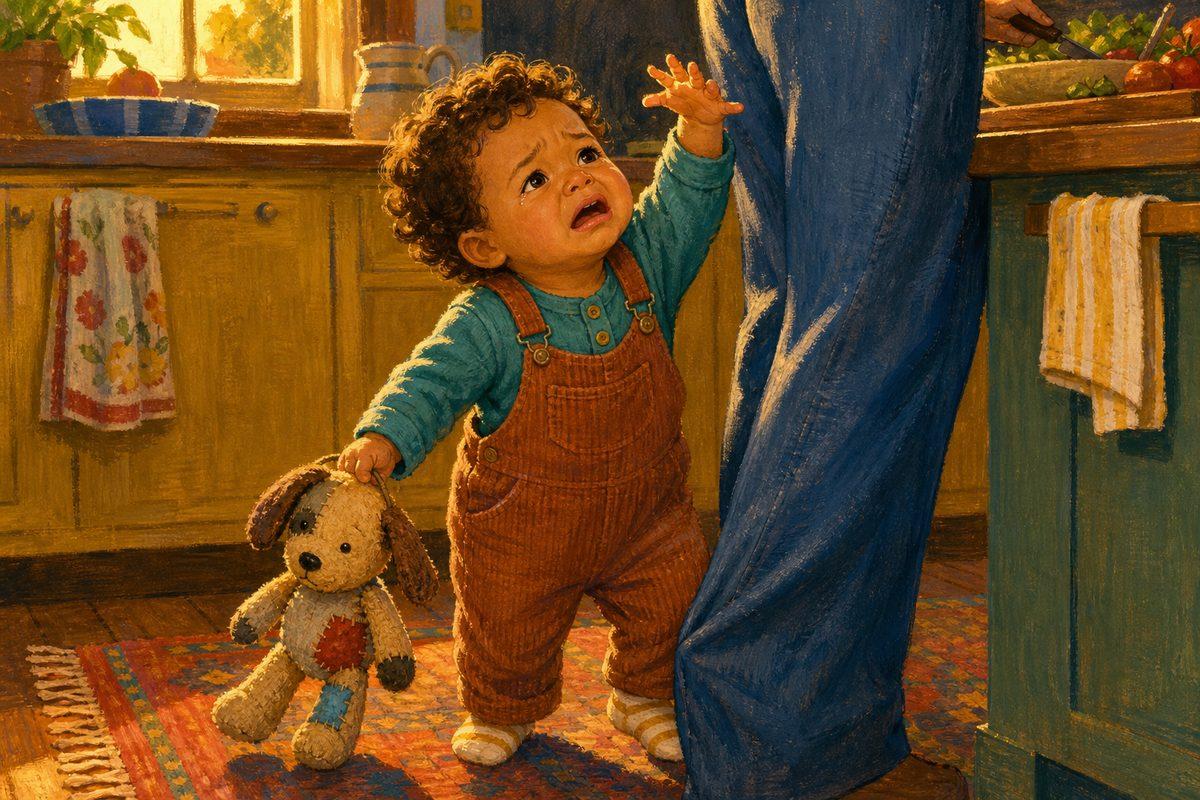
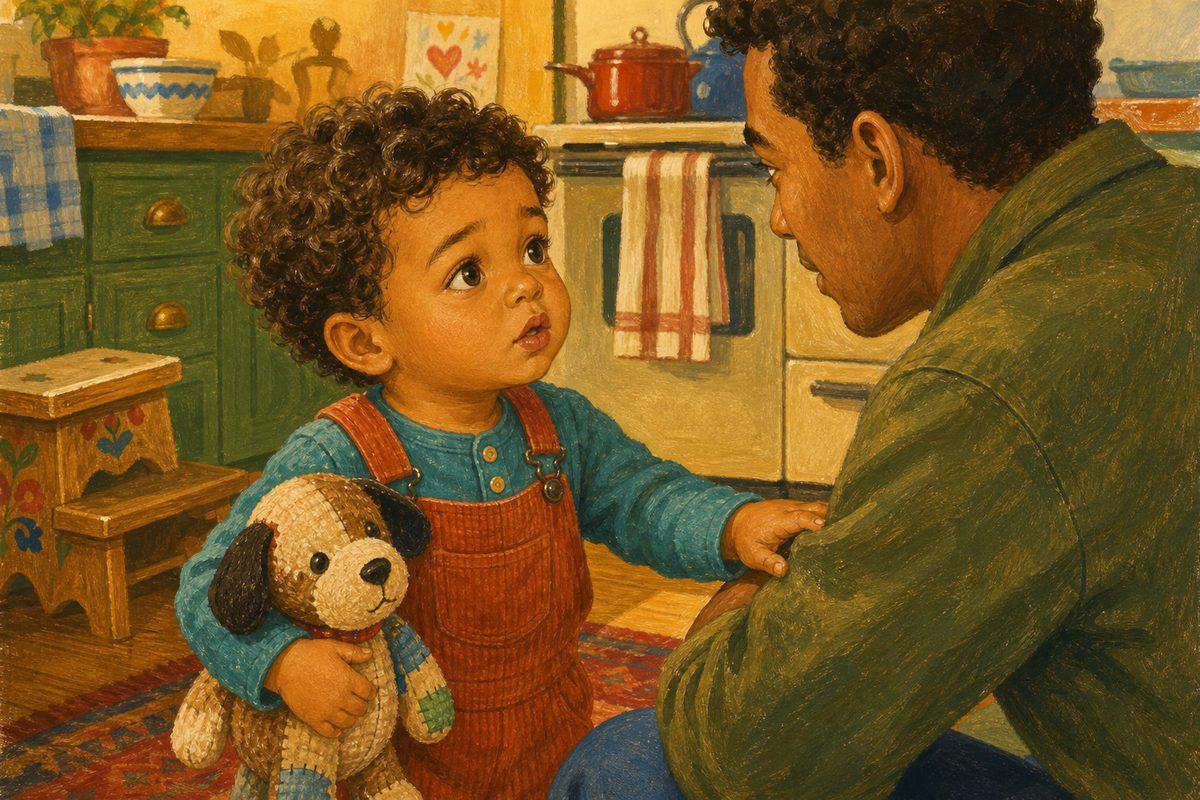
What this story is built to help with: Naming big feelings, trading the whine for a calm ask, and feeling heard — emotion coaching your child can rehearse as the hero.
Why a book where your child is the hero helps the whine fade
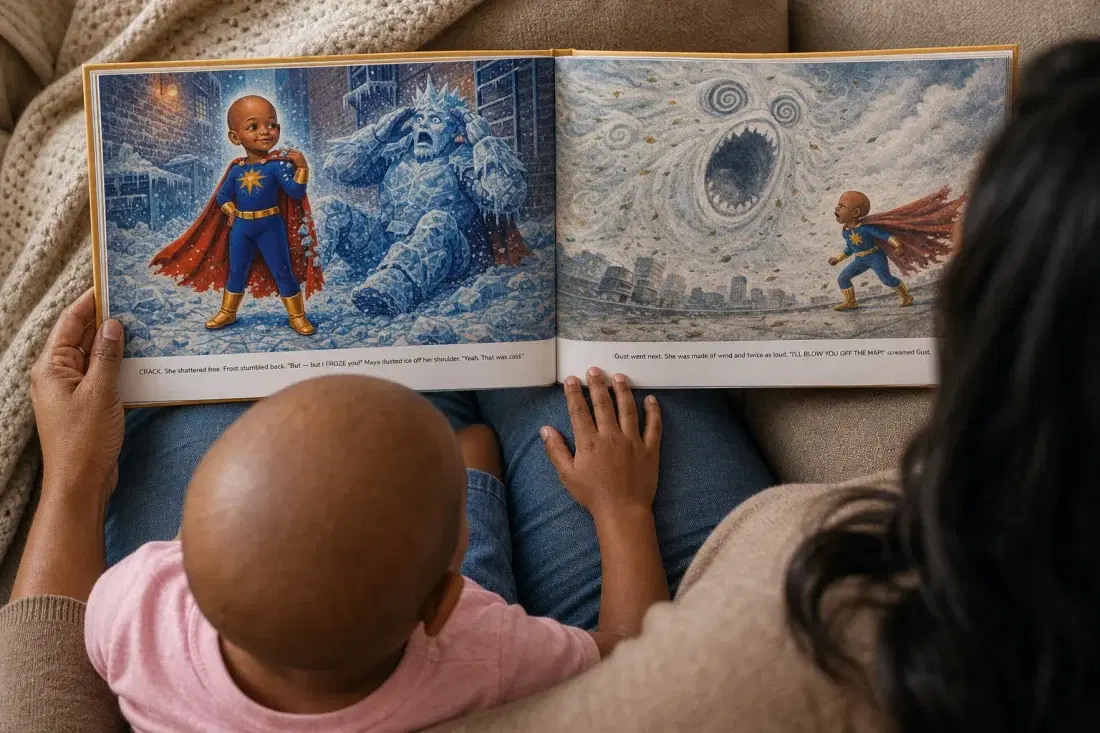
Here’s the catch with “just use your words”: you can’t teach it mid-whine. A flooded toddler isn’t learning anything — the words have to land when they’re calm, and a bedtime story is the calmest classroom there is. A story lets your child rehearse the big-kid voice before they need it, which is exactly the muscle that replaces the whine. [7]
Now make your child the hero of it. When they are the little one on the page who feels the big feeling, tries the calm words, and gets heard — read again and again — the calm ask starts to feel familiar, and familiar is easier to reach for in the hard moment. You reading it together is the magic: the book plus you is what makes it land. [7, 8]
Quick answers
Is my toddler whining to manipulate me?
No. A 2- or 3-year-old’s brain can’t yet plan that — whining is just what comes out when a feeling gets big and the words (or the calm) aren’t there yet. It’s a bid for help, not a strategy. Hear what’s underneath it and hand them the words, and it fades as their language and self-control grow.
Why does my toddler whine more at the end of the day?
Because the tank is empty. Whining spikes when a child is tired, hungry, or overstimulated — it’s often the last-resort signal right before a meltdown. A snack, a slower pace, or a quieter room usually does more than any script.
Should I just ignore the whining?
Ignore the **sound** if you like, but don’t ignore the **child**. The move is to warmly name the feeling and model the calm ask (“try it like this — ‘Mama, help please’”), then answer that calm voice fast. Punishing the whine teaches shame; coaching the calm ask teaches the skill.
When will the whining phase end?
It eases as language and impulse control catch up — usually noticeably better by 4–5, though tired days still bring backslides. It takes thousands of gentle repetitions before the calm words work on their own, so you’re not failing if it’s slow; you’re building a skill.
Who’s behind this
I’m Dao — a mom, and the founder of PlotJoys. I make personalized storybooks where your child is the named, illustrated hero, because when a feeling is too big for the words, the gentlest way in is a story where a kid just like them finds the words and is met with warmth. That’s the quiet magic of a book made just for them.
Tell us the moment in a sentence or two, add a photo, and see them drawn as the hero.
Keep reading
The research, if you want it
- ZERO TO THREE — “How to Cope (and Help!) When Your Child Whines”
- ZERO TO THREE — “Helping Toddlers Develop Self-Control From 24–36 Months”
- Nemours KidsHealth — “Language Development in Your 2- to 3-Year-Old”
- Toddler Talk (Stephanie Hatleli, MS CCC-SLP) — “Receptive vs. Expressive Language”
- The Gottman Institute — “An Introduction to Emotion Coaching”
- Wilson et al., Child & Family Behavior Therapy (2014), via PMC — “Parental Emotion Coaching & Self-Regulation”
- Dennis et al., Vocabulary Learning and Instruction (2024) — “Shared Book Reading & Emotional Vocabulary”
- Blewitt et al., JAMA Network Open (2018) — “Social-Emotional Learning in Early Childhood: Meta-analysis”