Daycare & Behavior
Daycare for Toddlers Who Bite — What’s Normal, and What Helps

By Dao, Founder · PhD in mathematics, former Director of Data Science at Uber and Capital One · LinkedIn ↗
The short version
- Biting is normal and common — big feelings outrunning words, not a bad kid or bad parenting. It usually fades by age 3–4 as language fills in.
- The fix isn’t punishment — it’s find the trigger → teach the replacement (words like “no,” “stop,” “mine,” or a teether for sore gums) → respond the same calm way every time.
- Drop the “biter” label — it can become a self-fulfilling identity. The real risk to your kid is the label, not the phase.
- Get help if it’s getting worse, not better past age 3–4, is intense, or comes with delayed speech — a pediatrician or a speech-language check can address a driver, not just the symptom.
You got the call — or the note in the cubby — and your stomach dropped: your toddler bit another child. The shame is real, and it’s misplaced. Biting is one of the most common toddler behaviors there is, almost always a sign of big feelings outrunning words, not a sign of a bad kid or a bad parent. It clusters between the first and second birthday and usually fades on its own by around age three or four, as language fills in. If you’re up tonight searching what a daycare does with a toddler who bites — or just whether your kid is okay — here’s the honest picture: why it happens, how to help it stop, what a good center should be doing, and the real signs it’s worth a doctor or a speech check. You’re not failing, and you’re not alone.
First, the thing no one says to the biter’s parent: you are not raising a bad kid. Early-childhood experts are unanimous that biting is a typical, age-expected stage children move through as they gain self-control and words — not a character flaw, and not a verdict on you. The single most important thing you can do for your child’s reputation is also the simplest: don’t let anyone call them “a biter.” A label like that can quietly become an identity a child grows into. Drop the label, keep the child.
Part of our guide to social-emotional skills by age.
Under 2: mouths, gums, and no words yet
At this age, biting is barely “behavior” at all — it’s a body doing what bodies do.
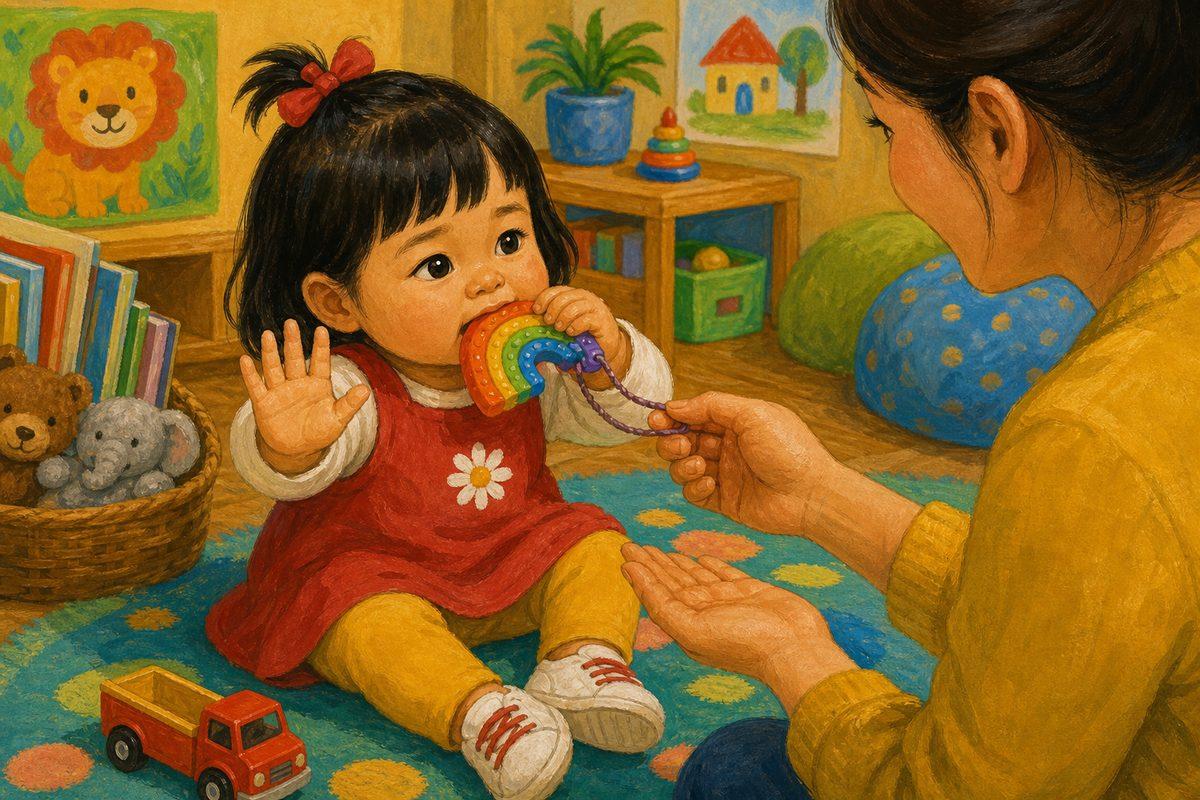
Babies and young toddlers explore with their mouths, and teething adds sore gums that beg to be bitten down on. There’s no plan and no malice — just a mouth and a feeling, with zero words to bridge them. [3, 5]
Try this: Offer something safe to bite (a chilled teether, a chewy toy), keep little ones in close range during play, and stay matter-of-fact. There’s nothing to “correct” yet — just redirect the mouth.
2–3: the peak — big feelings, no words
This is where most biting happens, and it’s the most misunderstood.
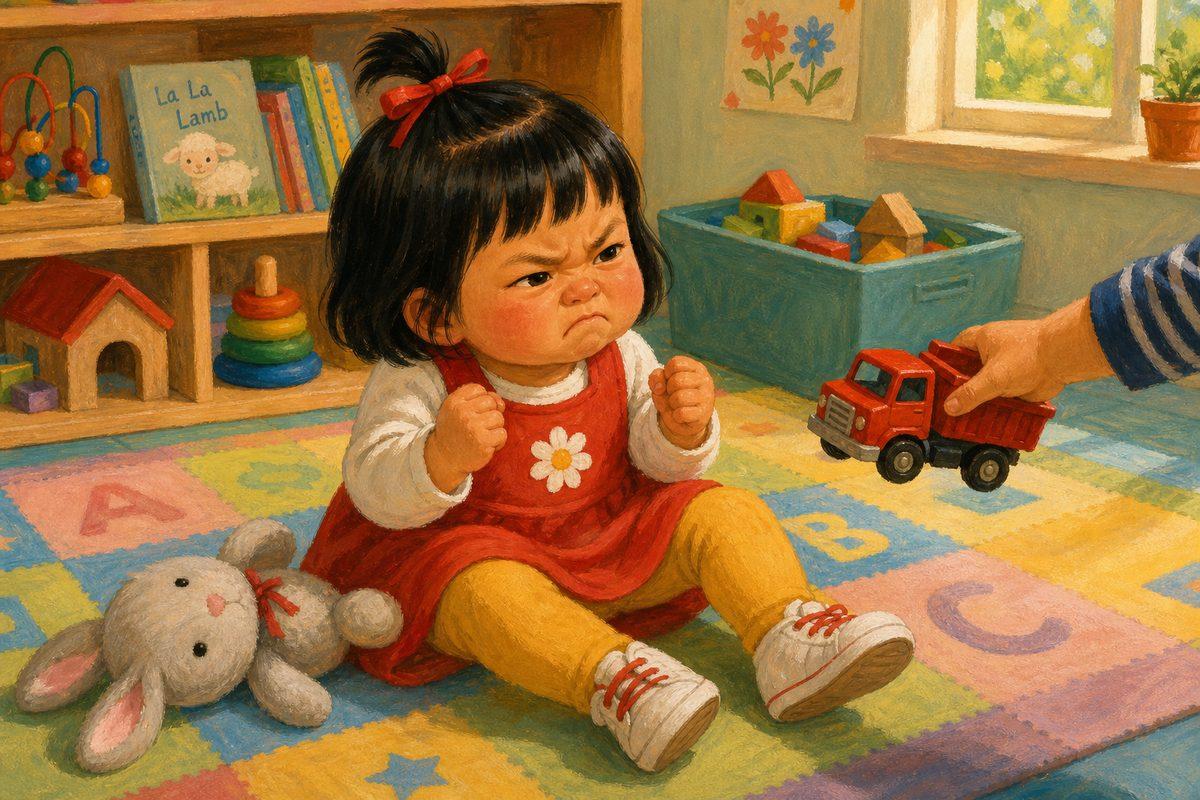
A two-year-old has enormous feelings and almost no language to release them — so when a toy gets grabbed or the room gets overwhelming, a bite is the fastest tool they’ve got. It often happens over the same trigger again and again (a coveted toy, a transition, being tired). [2, 6]
Try this: Play detective: find the trigger, then hand them the words — “no,” “stop,” “mine,” “my turn.” Narrate the feeling for them (“you’re mad — he took the truck”). The goal isn’t to stop the feeling; it’s to give it a different exit.
3–4: fading as words arrive
For most kids, this is where biting winds down.
As language takes off, the need to bite drops — your child can finally say the thing they used to bite about. The occasional slip under big stress is still normal here; the overall trend should be down. [5]
Try this: Keep the response boringly consistent: comfort the hurt child first, a calm “no biting — biting hurts,” then back to the words. Praise the moments they use a word instead — that’s the muscle growing.
4–5: rarer — and worth a closer look if it persists
By now, biting should be mostly behind you.
A four- or five-year-old who is still biting regularly, or biting harder over time, is outside the typical window. It doesn’t mean something is wrong — but it’s the age where “let’s just wait it out” stops being the answer. [3, 5]
Try this: This is the cue to loop in your pediatrician (see below). Keep doing the calm, consistent response in the meantime — but you don’t have to figure out a persistent pattern alone.
How to actually help it stop
- Find the trigger first. Almost every biting habit has a pattern — a specific toy, a time of day, a transition, hunger, overwhelm. You can’t fix what you haven’t named, so watch for a few days before you change anything. Understanding the why is what lets you pick a response that works. [1]
- Teach the replacement. Biting is filling a job — give the job to something else. For sore gums or a kid who needs to chew, offer a teether. For frustration, hand them the words: “no,” “stop,” “that’s mine,” “my turn.” You’re not just removing the bite; you’re giving them the tool they were missing. [1, 4]
- In the moment, guide — don’t punish. When a bite happens, the whole script is three calm beats: go to the child who got hurt first, then turn to yours with the same matter-of-fact words every time — “no biting. biting hurts” — then move on. Skip the big reaction. Biting back, harsh time-outs, and shaming don’t build the self-control that stops biting — they just frighten and confuse a toddler, and a giant reaction can accidentally make biting the best way to get your attention. Calm and a little boring is exactly what teaches. [4, 5]
- Know what a good daycare should be doing — and how to keep your spot. The fear underneath tonight is usually “will they keep him?” — so here’s the honest picture. Preschool biting rarely ends in expulsion; it’s meant to be a true last resort, and the AAP is formally worried about how readily young kids get pushed out. A good center doesn’t build a case against your child — it makes a plan with you: keeping a closer eye during the tricky stretches, watching for the trigger, teaching the replacement right there in the room, and keeping you in the loop. Your part is to be the parent they want to partner with — reach out first, share what you’re trying at home, ask what they’re seeing, and agree on one consistent response. A family that leans in is one a center leans toward, not one it pushes out. [7, 8]
- Know when to get help. Most biting needs patience, not a professional. But talk to your pediatrician if it’s getting worse instead of better, is unusually intense, lasts well past age 3–4, or comes with other worries. And here’s the one most parents never hear: because biting so often stands in for words a child can’t yet say, delayed speech can be a hidden driver — so if your child’s talking seems behind, a speech-language assessment can treat the cause, not just the symptom. [5, 3, 1]
See the “gentle teeth” story — starring your child
What this story is built to help with: A personalized storybook is the perfect way to give them somewhere else to put it — your child as the hero practicing the replacement: name the feeling, say the word, find the chew, so biting has a better way out.
Why a book — and why one with their name in it
Here’s the catch with “just teach them to use words”: you can’t teach it mid-bite. A flooded toddler isn’t learning anything — the teaching has to happen when they’re calm, and a bedtime story is the most natural calm-moment classroom there is. A story lets a child rehearse the words for big feelings before they need them, which is exactly the muscle that replaces biting. [4]
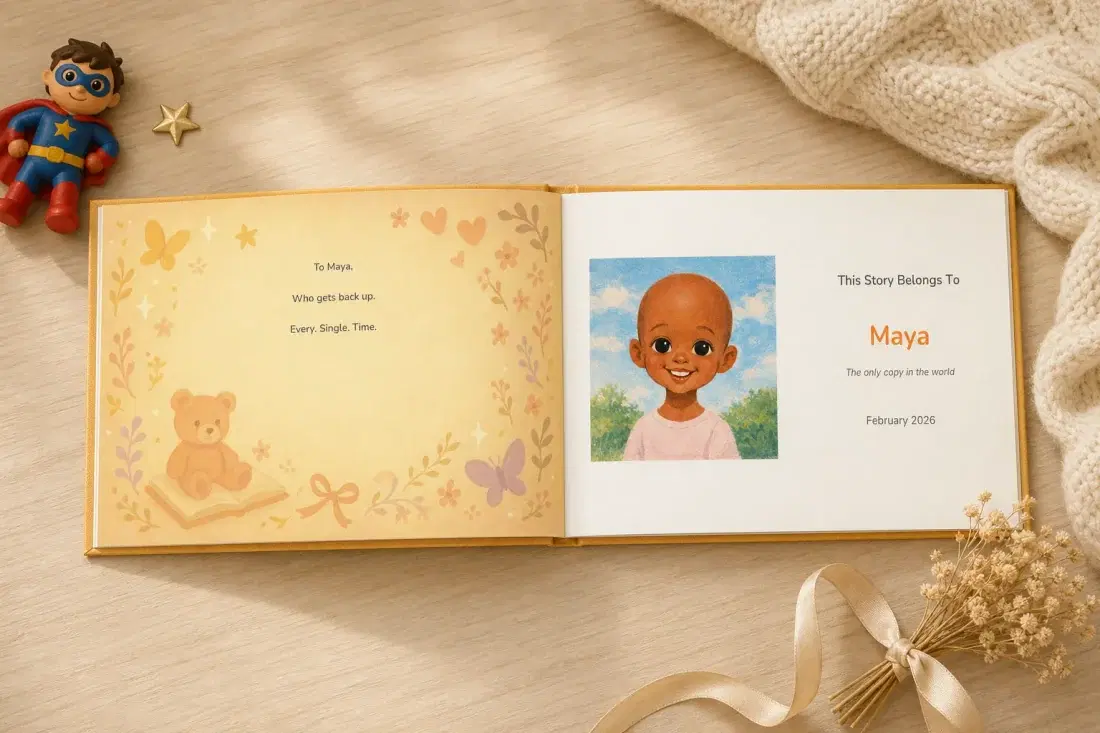
Now make your child the hero of it. A story where they feel the mad, and choose the word or the chew instead of the bite — read again and again — pre-loads the script and, just as importantly, hands your child an identity that is the opposite of “the biter”: a kid who is learning, capable, gentle. And because they’ve practiced it as the hero, the gentle choice feels familiar when the real moment comes — easier to reach for. You reading it together is the magic, and it hands your child a version of themselves getting it right to grow into. [4]
Quick answers
Will my child be labeled “the biter” or struggle to make friends?
The real risk is the label, not the phase. Biting is normal and fades as language grows; what can stick is an identity — so the guidance from experts is to drop the “biter” label (yours and everyone else’s), because children can grow into the identity adults assign them. Handle the behavior, protect the reputation.
Can the daycare expel my child for biting?
It can happen — early-childhood expulsion is real and more common than parents expect. But it’s meant to be a last resort: the AAP is formally concerned about how readily young kids are pushed out, and several states now restrict it. The way to avoid it is to partner with the center early — show them you’re working the same plan at home, and ask what they’re seeing and trying.
Should I bite my child back to show them how it feels?
No. Biting back (or harsh punishment) doesn’t teach self-control — it frightens and confuses a toddler and models the exact thing you’re trying to stop. The approach that works is calm, consistent guidance: name the feeling, give the word or the teether, and tend to whoever got hurt.
When should I worry / see a doctor?
Talk to your pediatrician if the biting is getting worse rather than better, is unusually intense, continues well past age 3–4, or comes alongside other concerns. And if your child’s speech seems delayed, ask about a speech-language assessment — biting often substitutes for words a child can’t yet say.
How do I face the teacher — and the other child’s parent — tomorrow?
With your head up. You are not the first parent at that center to have a biter, and you won’t be the last — the staff know it’s a phase. Keep it simple and forward-looking: “I’m so sorry — we’re working on it at home, and I’d love to team up on it here.” You don’t owe a long apology or your child’s whole story. If you cross paths with the other parent, a short, warm “I’m really sorry, we’re on it” is plenty — you don’t have to grovel, and you don’t have to explain. Handle the behavior, and keep your child’s dignity, and your own.
Who’s behind this
I’m Dao — a mom, and the founder of PlotJoys. I make personalized storybooks where a child is the hero of their own story, because when your kid is going through a hard phase, the most powerful thing you can give them is a version of themselves getting through it — gently, capably, by name. If you’re the parent who got the call today: your child is not the bad one, and you’re not alone.
Tell us the moment in a sentence or two, add a photo, and see them drawn as the hero.
Keep reading
The research, if you want it
- ZERO TO THREE — “Toddler Biting: Finding the Right Response”
- ZERO TO THREE — “Why do toddlers bite?”
- Cleveland Clinic — “Toddler Biting: How To Stop a Toddler From Biting”
- NAEYC — “Understanding and Responding to Children Who Bite”
- Nemours KidsHealth — “Biting”
- ZERO TO THREE — “Why Do Toddlers Bite? (Educator’s Version)”
- American Academy of Pediatrics, HealthyChildren.org — “Preventing Preschool Expulsions: AAP Policy Explained”
- Preventing Suspensions and Expulsions in Early Childhood Settings — “Overview of the Issue”