Gift Guide
A First-Day-of-School Gift for a Nervous Preschooler

By Dao, Founder · PhD in mathematics, former Director of Data Science at Uber and Capital One · LinkedIn ↗
The short version
- The nerves are normal — and a good sign. Separation anxiety is a healthy part of development that most children outgrow; the tears are about your bond, not a problem to solve.
- A comfort object is the classic first-day soother. A small blanket, toy, photo, or charm reassures a child when you're apart — and it is not a sign of weakness.
- A rehearsal book does the work before the day does. Practicing the day and the goodbye ahead of time shrinks the fear of the unknown.
- The book plus you is the magic. Reading it together — and starring your own child as the brave one who walks in — turns a gift into a shared ritual.
The gift that soothes a nervous preschooler isn't the flashiest one — it's something they can hold onto when you're not there. A comfort object they can carry and a rehearsal book that lets them practice the day ahead both do quiet, real work before drop-off. First-day nerves are a completely normal, healthy part of growing up, not a sign anything's wrong.
First, why the nerves (nothing's wrong with your kid)
Here's the reframe worth holding onto: a preschooler who clings, cries, or melts down at drop-off is doing something completely normal. Separation anxiety is a normal part of child development, and pediatricians go a step further and call it "a very important developmental milestone and completely healthy." The tears aren't a red flag. They're the sign of a child who loves being with you — and is learning, in real time, that you leave and you come back. Crying, clinging, and tantrums are all typical reactions to separating, so when you see them, you can name them as expected rather than alarming. And the reassuring part: this distress typically fades over time, and most kids settle into the new normal by the early school years. (If the distress is intense and really lingers, especially by school age, it's worth a quick chat with your pediatrician — not because something's wrong, but because you never have to carry the worry alone.) [2, 3, 4]
Gifts that actually soothe #1: a comfort object they can carry
If you buy one thing, make it something small your child can hold when you're not in the room. A special blanket or little stuffed friend reassures a child when they're separated from you and comforts them when they're upset — it "helps children make the emotional transition from dependence to independence." And if a well-meaning relative ever frowns at the lovey, you can say this with total confidence: transitional objects "are not a sign of weakness or insecurity, and there's no reason to keep your child from using one." The trick is to make it portable and personal. Tuck the object — even a small photo of the two of you or a special charm — into the backpack, and "fill it with love" before each drop-off. It becomes a pocket-sized piece of home your child can reach for the moment the room feels big. [1, 3]
Gifts that actually soothe #2: a rehearsal book
A book is a gift that does its work quietly, in the days before the big morning. So much of a preschooler's fear is fear of the unknown — and the antidote is a preview. "Practice going to school and your goodbye ritual before you even have to part ways." Seeing or visiting the school beforehand eases that final goodbye, and simply telling your child what to expect — then putting a positive spin on the fun parts, like getting to play with friends — lowers the fear of the unknown. A good first-day book lets you rehearse all of that from the couch, cuddled up, days ahead. It gives your child a character to root for and a story that ends the way you want theirs to: new felt scary, and then it turned out okay. [2, 3, 5]
The first-day goodbye ritual (pair it with the gift)
Whatever you give, the gift works best alongside a goodbye you've practiced. Keep the actual goodbye short and sweet — a quick hug, a triple kiss at the cubby, a secret handshake, and then go. It feels counterintuitive, but lingering makes it harder: "If you linger, the transition time does too. So will the anxiety." Keeping the moment of separation as brief as possible is one of the kindest things you can do. Build the ritual before day one and rehearse it at home so it's familiar, not brand-new, when it counts. And on the walk in, put a positive spin on it — talk up the sand table, the new friends, the snack. You're not hiding the hard part; you're pointing the flashlight at the good part. [2, 3, 5]
The one that stars your child: a "brave first day" book
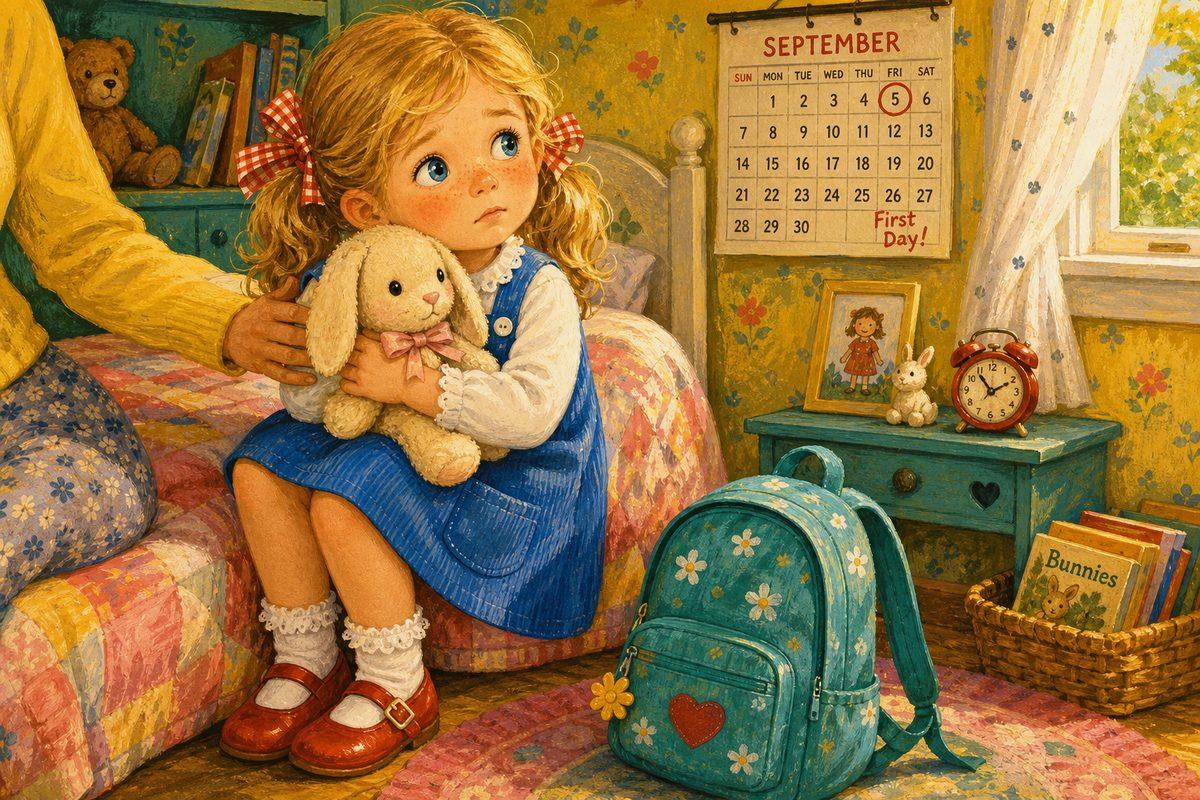
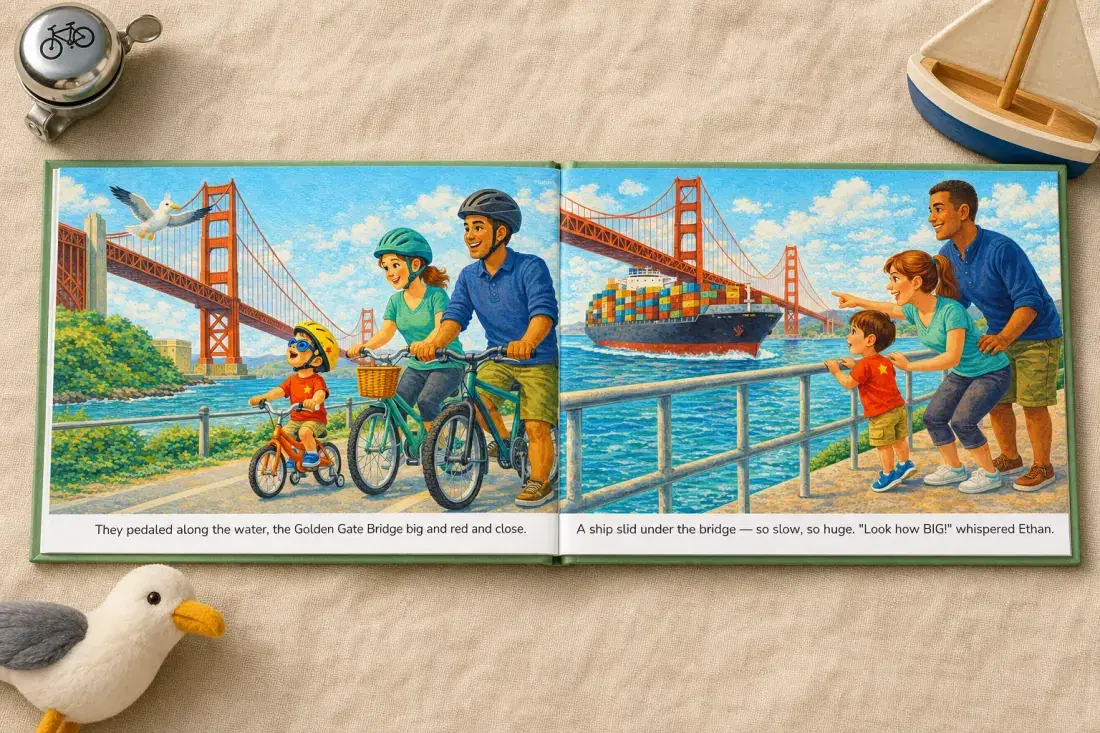
Here's a gift that is a rehearsal book and a comfort object in one. A preview book helps a child know what to expect; a keepsake book they carry becomes its own little transitional object. Now make the hero your own child — named and illustrated as themselves — and something clicks. Instead of watching a stand-in raccoon or llama be brave, your child watches THEMSELVES walk in, hang up the backpack, and find a friend. They mentally rehearse being the brave one, by their own name and face. It's sneaky-effective, it's screen-free, and — this is the whole point — it's something you read together the night before. The classics below are wonderful, and none of this replaces them. This just adds the one thing a store-bought book can't: your child, as the star of their own first-day story. [1, 5]
Why a book starring your child soothes first-day nerves more than one they just read
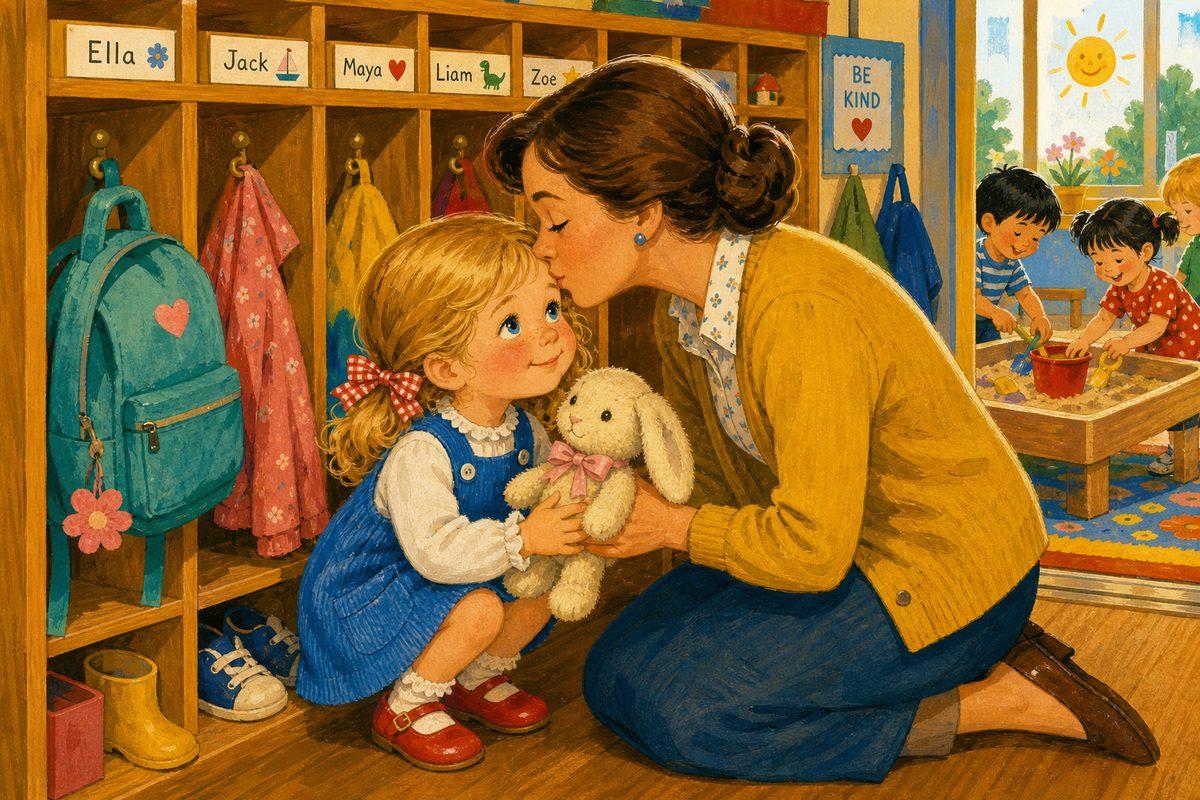
Every first-day book helps a child rehearse the morning ahead — but a personalized one lets them live the exact moment they're dreading. Your child, by their own name and face, walks up to the classroom door, hangs the backpack on the hook, gives you a kiss at the cubby, and finds a friend at the sand table. They watch themselves do the hard thing and come out the other side, days before they have to do it for real. So when the actual morning arrives, drop-off isn't the great unknown anymore. It's a story they already know the ending to — and the ending is: I walked in, and I was okay.
That's the difference a name and a face make. When the brave one in the book is a stand-in raccoon or llama, your child has to imagine their way into it — that character calmed down and found a friend. When the brave one is actually them, there's nothing to imagine. "That character was brave" quietly becomes "I can be brave." Same goodbye, same wobble in the tummy — but now it's their own face walking through the door, which is exactly the small, sturdy thing a nervous preschooler can hold onto when the room feels big.
And the reassurance lands twice. Once from a hero who is unmistakably them, and once from you — because the real magic isn't the book on its own, it's the book on your lap the night before. Your child traces their illustrated self through the classroom door while you promise, out loud, that tomorrow turns out fine. That shared, screen-free read is the whole ritual. The book is just the warm, easy way in.
6 first-day books teachers actually reach for
Every one of these has soothed a nervous little person through a first morning. A couple of them double as ritual props — we've flagged those, because a book you can DO something with hits differently.
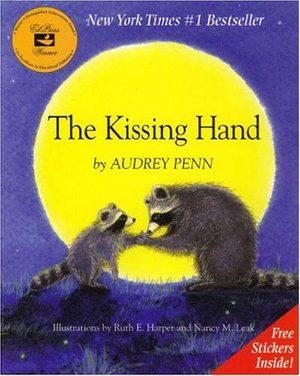
The Kissing Hand by Audrey Penn (ages 3-6) — The one so many teachers reach for on the first morning. Chester Raccoon doesn't want to leave Mama, so she presses a kiss into his palm to carry into the scary new place — a little reassurance he can hold onto all day. Bonus: it doubles as a ritual. Press a kiss into your child's palm at the cubby and it goes to school with them.
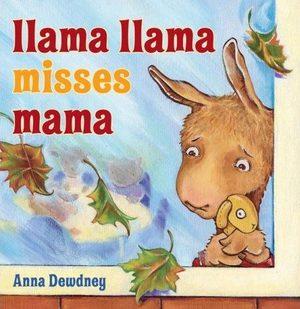
Llama Llama Misses Mama by Anna Dewdney (ages 2-5) — It's Llama Llama's very first day of preschool, and the moment Mama leaves, the excitement drains right out of him. The rhyming beat is soothing and the ending is honest: new can feel scary AND turn out fun. Perfect for the child who loves the idea of school until it's actually goodbye time.
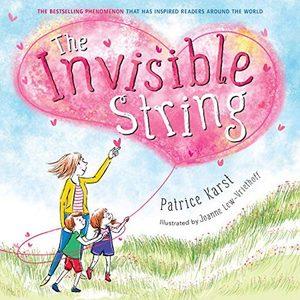
The Invisible String by Patrice Karst (ages 3-8) — The comforting idea that a string of love connects you even when you're apart — so a child at drop-off is never really alone. Another one that doubles as a ritual: name the invisible string together, and give it a tug on the way in.
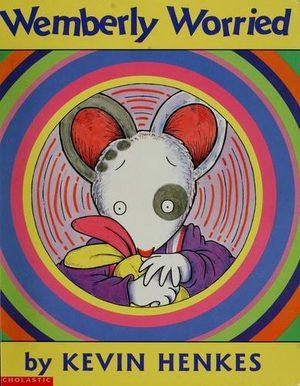
Wemberly Worried by Kevin Henkes (ages 4-7) — Wemberly worries about everything, but most of all about her first day of school. For the little worrier in your house, it's a relief to see a character who frets exactly the way they do — and then finds a friend and a good day waiting on the other side.
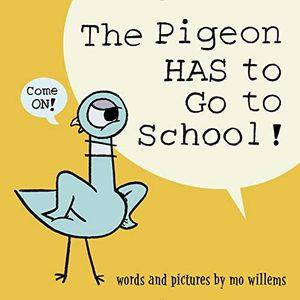
The Pigeon HAS to Go to School! by Mo Willems (ages 3-5) — Pigeon insists he already knows EVERYTHING, so why go to school? Underneath the bluster is a bundle of first-day nerves — and the laughs give a nervous kid a safe way to voice the exact same what-ifs out loud.
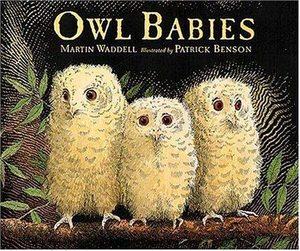
Owl Babies by Martin Waddell (ages 2-5) — Three owlets wake to find their mother gone and huddle together, worrying — until she swoops home. The simplest, truest promise for a young child: you go, and you always come back. A tender bedtime read the night before the big day.
Any of these will earn its place on the shelf. What none of them can do is put your own child at the center of the story — which is exactly the gap the next one fills.
The brave-first-day book, starring your child
Quick answers
Is it normal for my preschooler to be this nervous about the first day?
Yes — completely. Separation anxiety is a normal part of child development, and pediatricians describe it as a healthy developmental milestone. Crying, clinging, and tantrums at goodbye are typical reactions, not warning signs, and most kids settle in as the routine becomes familiar.
When should I talk to my pediatrician about it?
The everyday tears at drop-off are expected and fade over time. If the distress is intense and really lingers, especially by school age, it's worth a check-in with your child's pediatrician — not because something's wrong, but so you have support and peace of mind.
Does giving a comfort object make separation harder in the long run?
No. A comfort object reassures a child when they're apart from you and helps them make the emotional transition from depending on you to feeling independent. It is not a sign of weakness or insecurity, and there's no reason to keep your child from using one.
We already have first-day books — is a personalized one really different?
It adds the one thing a store-bought book can't: your own child, by name and face, as the hero. The classics rehearse the day with a stand-in character; a personalized book lets your child watch THEMSELVES do the brave thing — which is a rehearsal book and a carry-along keepsake in one. It's meant to sit alongside the classics, not replace them.
Who’s behind this
I'm Dao — mom, and the founder of PlotJoys. I started this because of a goodbye of my own: my daughter, teary at a daycare door, and me wishing I could hand her something that felt like home to hold onto. That's really all a good first-day gift is — a small, steadying thing in a brave little hand, and you beside them for the read. If a book where your child is the hero helps that morning feel a little less scary, that's the whole reason we make them. Rooting for your little one on day one. — Dao
Tell us the moment in a sentence or two, add a photo, and see them drawn as the hero.
Keep reading
The research, if you want it
- HealthyChildren.org (American Academy of Pediatrics) — Transitional Objects: Security Blankets & Beyond
- Child Mind Institute — How to Separate From Clingy Kids
- PBS KIDS for Parents — Helping Preschoolers Cope With Separation Anxiety
- Children's Hospital of Philadelphia (CHOP) — Separation Anxiety: What's Normal and When to Worry
- HealthyChildren.org (American Academy of Pediatrics) — Soothing Your Child's Separation Anxiety