Separation Anxiety
Preschool Separation Anxiety: What’s Normal, What Helps

By Dao, Founder · PhD in mathematics, former Director of Data Science at Uber and Capital One · LinkedIn ↗
The short version
- Nearly every child experiences separation anxiety — at preschool age it’s normal, not a red flag, and it eases with predictable goodbyes and reliable reunions.
- It looks different by age: loud protest at 2, sideways worry at 3 (clinging, regression), tummy aches and big questions at 4, and a flare at every new start.
- What helps most starts before the door: practiced separations, one unchanging goodbye ritual, the day’s shape in kid-sized time, and a piece of home in the backpack.
- True separation anxiety disorder is rare: intense distress lasting four weeks or more that interferes with everyday life. That’s a pediatrician conversation — not a panic.
Preschool separation anxiety is normal — nearly every child goes through some version of the drop-off tears, and it fades as they learn, goodbye after goodbye, that you always come back. (The sobbing, the begging, the tummy aches at breakfast on school days — all real, and not a sign you’re doing anything wrong.) Here’s what it looks like at 2, 3, 4 and 5, what actually helps, and the (rare) signs it’s time to check in with your pediatrician.
The clinging, the tears, the one-more-hug that becomes five — none of it means something is wrong with your child, your school, or you. The American Academy of Pediatrics calls separation anxiety “a beautiful sign of a meaningful attachment.” Your child isn’t fragile; she’s attached — and busy learning to trust that your love holds even when you’re out of sight. You can help that learning along, and most of the helping happens before you ever reach the door.
Part of our guide to social-emotional skills by age.
Two: the loud years
The protest is big because the love is.

Separation anxiety often first shows up around 15 to 18 months and runs loud through the twos: crying that’s hard to stop, clinging, big reactions whenever the routine changes. Nearly every child experiences some degree of it between 18 months and three years — and it’s harder on days your child arrives hungry, tired, or coming down with something (so: many days). Child-development experts call this something to observe with curiosity, not something to worry about. [1, 4, 7]
Try this: Keep the goodbye short and exactly the same every day — triple kisses at the cubby, a special handshake — and let her carry a lovey or a small family photo as a bridge from home.
Three: the worry comes out sideways
They can’t say it yet — so they show it.
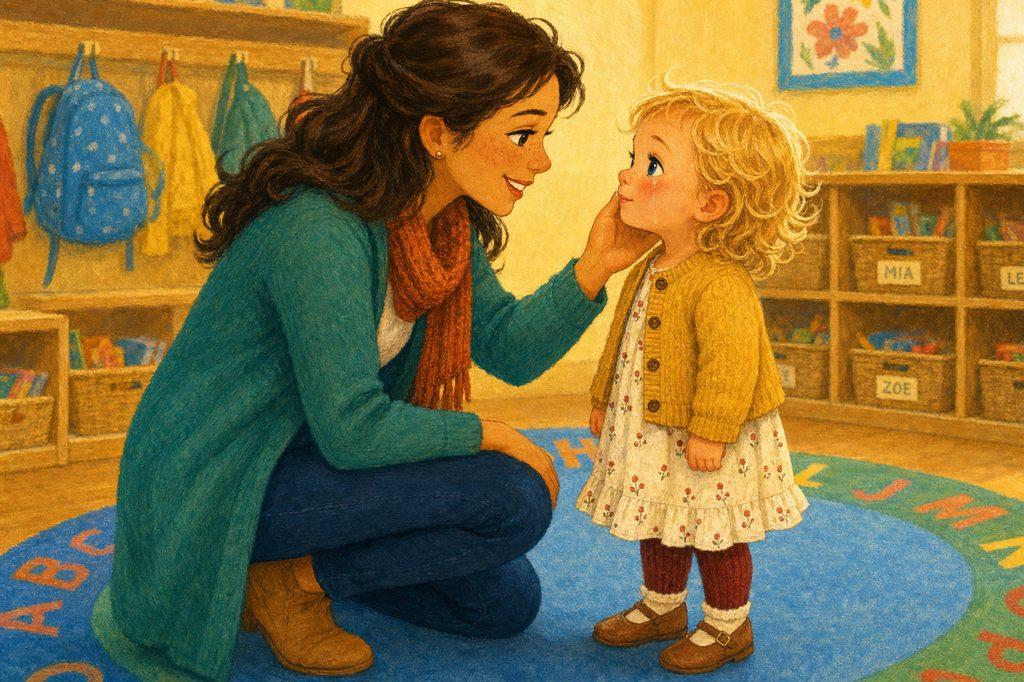
Most three-year-olds can’t put the worry into words yet, so it comes out sideways: clinging, going quiet, acting out — or moving backward for a stretch (a potty-trained kid having accidents, a “feed me” phase you thought was done). By three, most children also clearly understand the effect their pleas have on you. The stress is real — but this is where consistency becomes everything, because a plea that works today buys a bigger one tomorrow. [1, 5, 3]
Try this: Hold the line kindly: don’t come back into the room for one more hug, don’t cancel plans over tears — and tell her what to expect before anything in the routine changes. Then be back when you said you would, every time.
Four: the worry moves into the body
Old enough to see Monday coming — young enough to feel it in the tummy.
A four-year-old can anticipate. Separation anxiety at this age can resurface even after months of easy goodbyes — often around a transition like a new classroom — and it starts speaking through the body: stomachaches, headaches, and mystery aches that cluster suspiciously before drop-off. Skills can briefly slide backward too. All of it is still inside the normal arc. [11, 3, 8]
Try this: Give her the day in kid-sized time — “I’m back after snack and the playground” — and tuck a concrete reminder of you into the day: a note in the lunch box, a little photo, a kiss pressed into her palm.
Five: kindergarten, and when to check in
Almost always fine — and here’s the honest line.
By five, daily separation anxiety is genuinely rare — most children outgrow it by the time they’re preschool veterans, though a big new start like kindergarten can bring a flare, and for some kids the feeling lingers into the early school years. The line worth knowing: when intense distress lasts four weeks or more and interferes with everyday life — school refusal, constant physical complaints, mornings that can’t function — that’s the territory clinicians call separation anxiety disorder. It’s the exception, not the rule. [1, 3, 4, 11, 12]
Try this: Trust your gut. If the anxiety is extreme, isn’t easing, or keeps getting in the way of normal days — especially by school age — bring it to your pediatrician. Asking early is a strength, not an overreaction.
What actually helps (it starts before the door)
- Rehearse before it counts. Practice the trip to school and your goodbye ritual before the first real morning; visit the new room together a few times; play “parent, kid, teacher” at home and act out the goodbye. Rehearsal hands your child the one thing worry hates most: a sense of control. [1, 8, 5]
- Read your way there. Books about starting preschool are on nearly every expert list — the AAP’s child-care checklist includes them, and classics like “The Kissing Hand” exist for exactly this. Read together in the weeks before, talk about how the characters feel, then ask how she feels. The story gives the worry a doorway. [2, 5, 10, 11]
- Pick one goodbye ritual and never vary it — triple kisses at the cubby, a special handshake, a kiss pressed into her palm to “hold” all day. The magic is the sameness: a predictable goodbye is one she can trust. And keep it short — the longer the goodbye, the longer the anxiety. [1, 5, 3]
- Give the day a shape. A short, loving script that says what happens and when you’ll reconnect: “You’re going to have a fun day with your teacher and friends, and I want to hear all about it at dinner.” Use kid-sized time — “after lunch,” not “at 3:15.” [3, 8]
- Say a real goodbye, then go. Sneaking out while she’s distracted feels merciful, but it teaches her you might vanish at any moment — which grows the worry. One warm, confident goodbye, then a prompt exit, even through tears, is the kinder choice. [6, 9, 3]
- Send a piece of home, and keep the reunion promise. A lovey, a wishing stone, a love note in the lunch box — a physical reminder that the goodbye is temporary. Then come back when you said you would, every single time. That kept promise is how she builds confidence in her own ability to be without you. [5, 11, 1]
See the worry — and watch Mia carry it
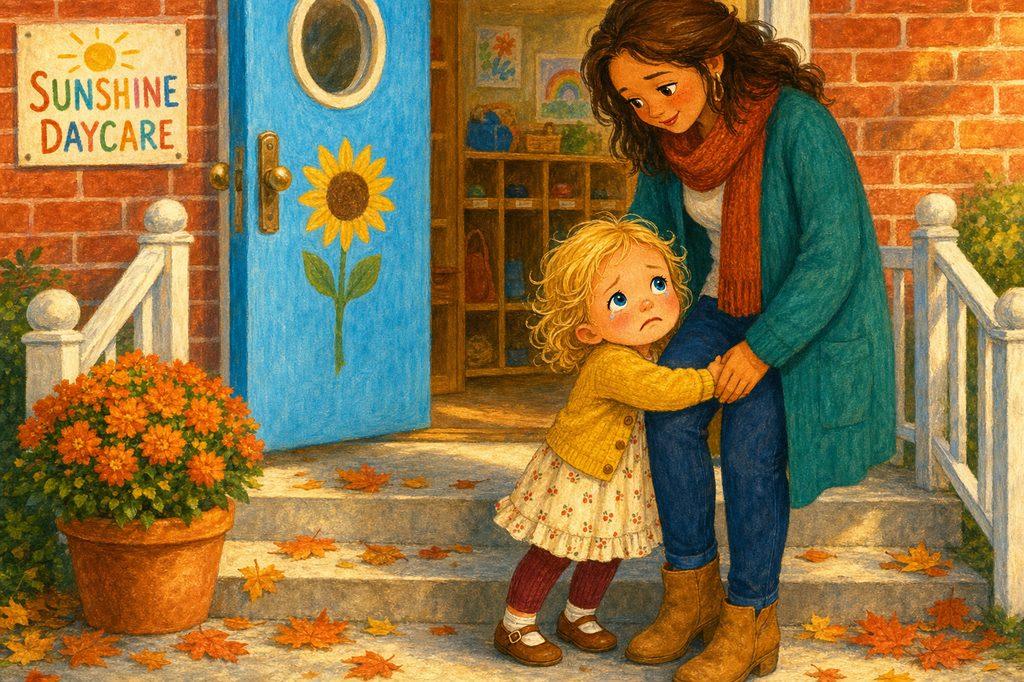
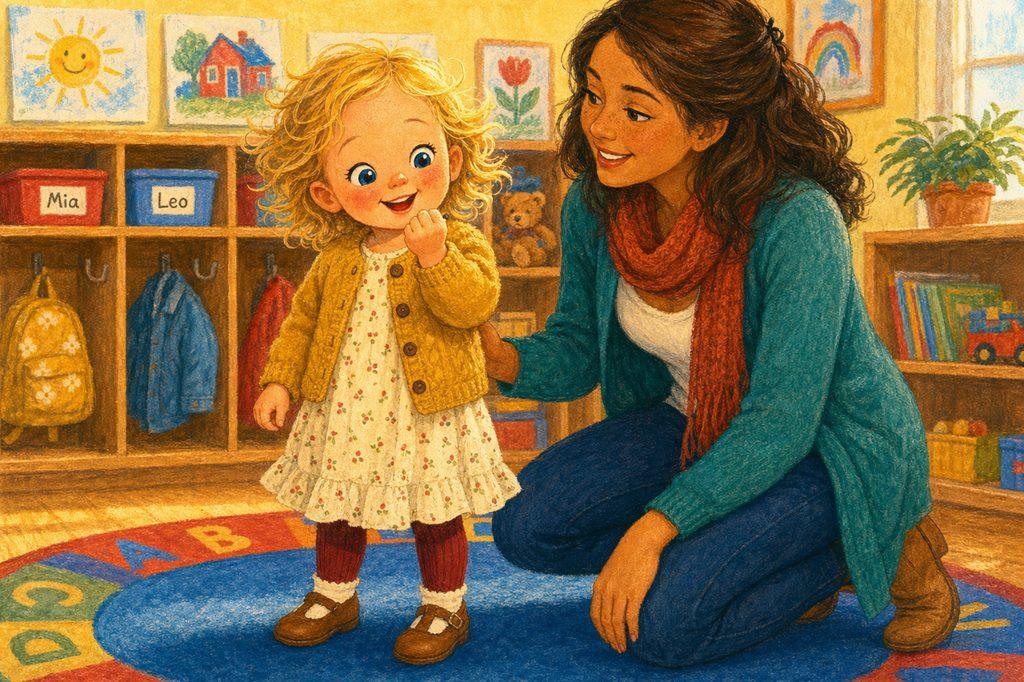
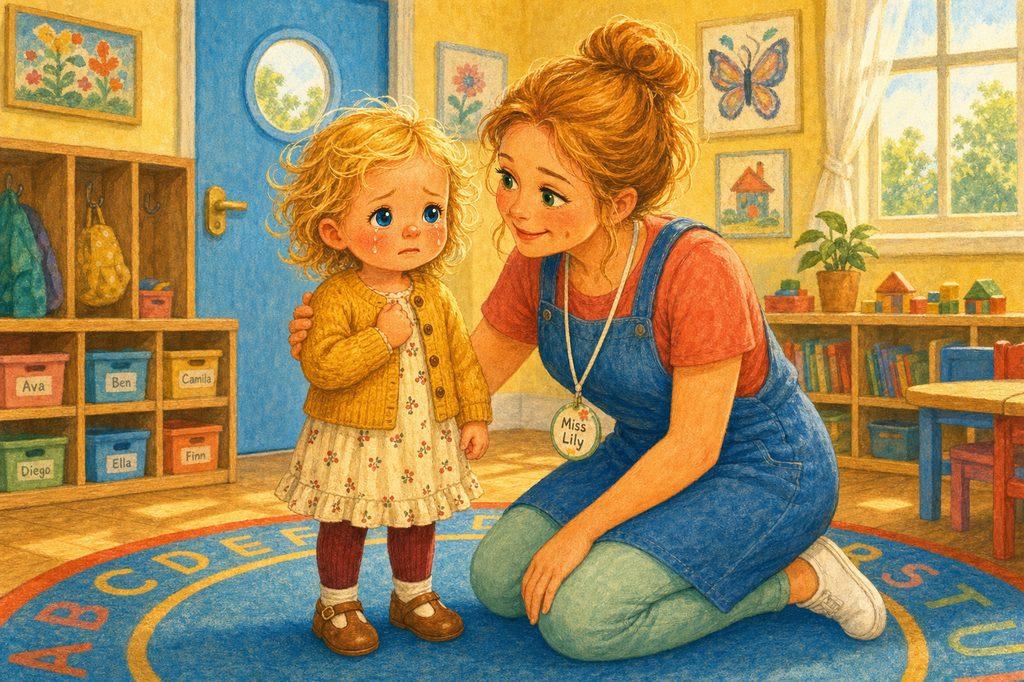

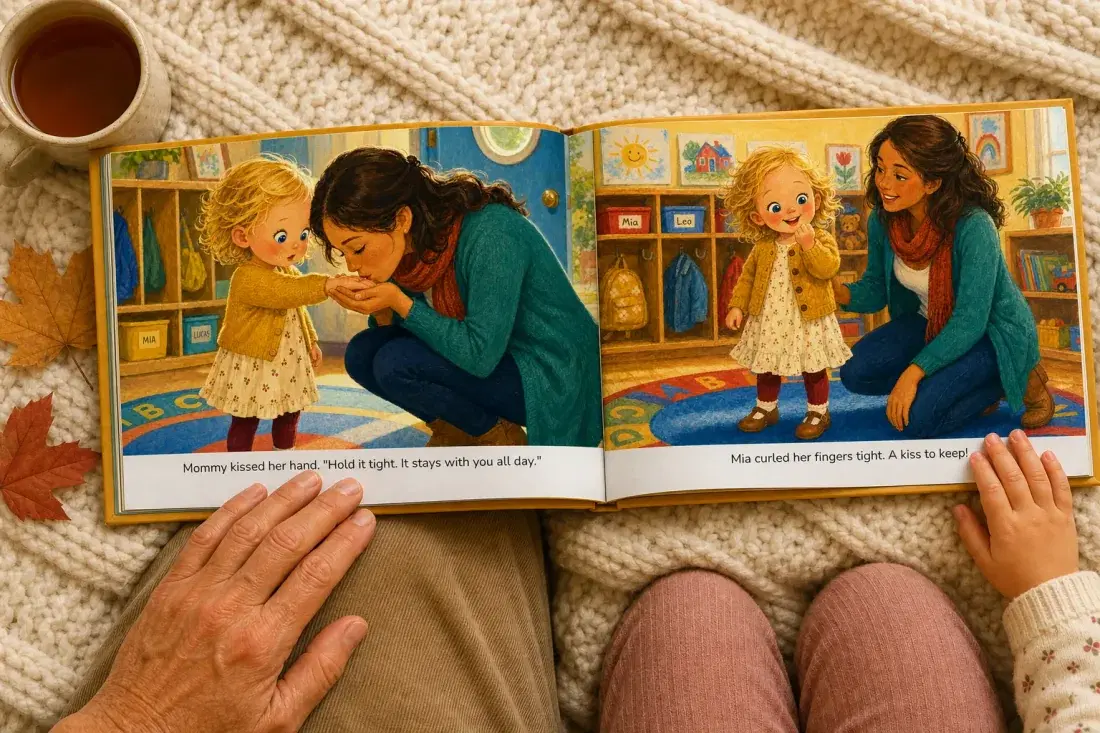
What this story is built to help with: This is rehearsal in its warmest form: your child — her name, her face — feels the wobbly tummy, holds the kiss, discovers the tears pass and the reunion always comes. When the real morning arrives, she’s already been the girl who made it to pick-up.
Why a story works on separation worry
Notice how every expert list above ends the same way: read books about the goodbye before you live it. That’s not filler advice — a story is rehearsal. Your child watches a hero feel the wobbly tummy, hold the kiss, make it to pick-up — and the real morning arrives already familiar. The experts even hand you the method: talk about how the characters feel, then ask how she feels. The story gives the worry a doorway. [2, 5, 10, 11]
A personalized book takes that rehearsal one step further: the hero isn’t merely like your child — she is your child, name and face and favorite sweater. “That girl was brave” becomes “I am brave.” And there’s research behind the warmth: in a study of toddlers, families shared more smiles and more laughter with personalized books than with ordinary ones. Then you make it land — the book, your steady goodbye, and your kept promise to return are the magic, together. [13, 1]
Quick answers
Is separation anxiety normal at 4 — even after years of easy drop-offs?
Yes. Separation anxiety can resurface multiple times through age four — often around a transition like a new classroom — and for some kids it lasts into the early school years. A flare after months of easy goodbyes is part of the normal arc, not a step backward.
What’s the difference between separation anxiety and separation anxiety disorder?
Degree and duration. Everyday separation anxiety is normal and fades with predictable goodbyes and reunions. Clinicians only consider the disorder when intense distress lasts four weeks or more and interferes with everyday life — and that’s rare. If you’re seeing that pattern, especially by school age, your pediatrician is the right first call.
My child gets stomachaches before preschool — could that be separation anxiety?
It can be. At this age worry often speaks through the body — stomachaches, headaches, and other physical complaints that cluster right before an expected separation are a recognized sign. If they’re frequent or worsening, mention the pattern to your pediatrician.
Should I stay in the classroom until she stops crying?
It feels kind, but a short goodbye is the kinder one — the longer the goodbye stretches, the longer the anxiety does too. One warm, confident ritual, a hand-off to the teacher, and a prompt exit works better than lingering. And never sneak out: a real goodbye is what keeps her trust.
How long does preschool separation anxiety last?
For most children it eases within a settling-in period as the new place becomes familiar and the reunions prove reliable — and daily separation anxiety past the preschool years is genuinely rare. If it isn’t easing after several weeks, or it’s intense enough to disrupt normal days, check in with your pediatrician.
Who’s behind this
I’m Dao — a mom. My daughter’s hardest goodbyes happened at a daycare door too, and that ache is part of why PlotJoys exists. I make personalized storybooks where your child is the hero, because a story they star in is the gentlest way to practice a brave morning before they have to live one.
Tell us the moment in a sentence or two, add a photo, and see them drawn as the hero.
Keep reading
- Kindergarten separation anxiety: what’s normal, what helps
- A personalized book for separation anxiety — how it actually helps
- A first-day-of-school gift for a nervous preschooler
- Toddler crying at daycare drop-off: the goodbye that helps (the full at-the-door script)
- Why I built PlotJoys — the night my daughter hugged the iPad
The research, if you want it
- American Academy of Pediatrics, HealthyChildren.org — “Soothing Your Child’s Separation Anxiety”
- American Academy of Pediatrics, HealthyChildren.org — “Preparing Your Child for Child Care”
- Children’s Hospital of Philadelphia — “Separation Anxiety: What’s Normal and When to Worry”
- Children’s Hospital of Philadelphia — “Separation Anxiety Disorder”
- Zero to Three — “Preschool Prep: Helping Toddlers Prepare for Preschool”
- Zero to Three — “Separation Anxiety”
- Zero to Three — “Understanding Toddler Behavior: What’s Typical and When to Seek Help”
- Nemours KidsHealth — “Separation Anxiety”
- Nemours KidsHealth — “Helping Your Child Adjust to Preschool”
- Nemours KidsHealth — “Reading Books to Preschoolers”
- PBS KIDS for Parents — “Helping Preschoolers Cope With Separation Anxiety”
- PBS KIDS for Parents — “How Do I Know If My Preschooler Has Anxiety?”
- Kucirkova, Messer & Whitelock (2013) — personalization and book engagement, Journal of Early Childhood Literacy