Separation Anxiety
Toddler Crying at Daycare Drop-Off: The Goodbye That Helps

By Dao, Founder · PhD in mathematics, former Director of Data Science at Uber and Capital One · LinkedIn ↗
The short version
- Those drop-off tears aren’t a problem to fix — they’re proof of your bond, and a normal developmental milestone.
- It peaks in the toddler year (around 10–18 months) and eases as your child learns, over and over, that you always come back.
- The goodbye that helps: a predictable ritual, a quick confident exit, and never sneaking out — a real goodbye is the kinder one.
- A “first day” story starring your own child is a gentle rehearsal for the brave morning — research-informed, though the real comfort still comes from you.
Your toddler clings to your legs and sobs as you head for the door — and you drive away with your heart in pieces, sure you’re doing it all wrong. You’re not. Those drop-off tears aren’t a problem to fix; they’re proof of how loved you are. It’s normal, it eases, and there’s a goodbye that genuinely helps. Here’s what’s happening — and what to do at the door.
Here’s the relief: separation anxiety isn’t a sign of a fragile child or a bad fit. It’s a milestone. It shows up once your baby works out that you still exist when you walk away (and that there’s only one of you) — so the clinging is evidence of the bond you built, not evidence that something’s wrong. It peaks in the toddler year, and it eases as they grow.
Part of our guide to social-emotional skills by age.
Around 9 months: where it starts
A brain leap, not a setback.

Somewhere around seven to nine months, something clicks: your baby works out that when you leave, you go somewhere they can’t follow. The very same leap that lets them understand the world — that people are real and permanent even when out of sight — is what makes goodbyes suddenly hard. Being shy or clingy around strangers right now is a milestone most babies are expected to show. [2, 11, 3]
Try this: Keep hellos and goodbyes warm and matter-of-fact, and play peekaboo — it quietly teaches “gone, then back.”
1 to 2: the drop-off years (the peak)
This is the hardest stretch — and it’s textbook.
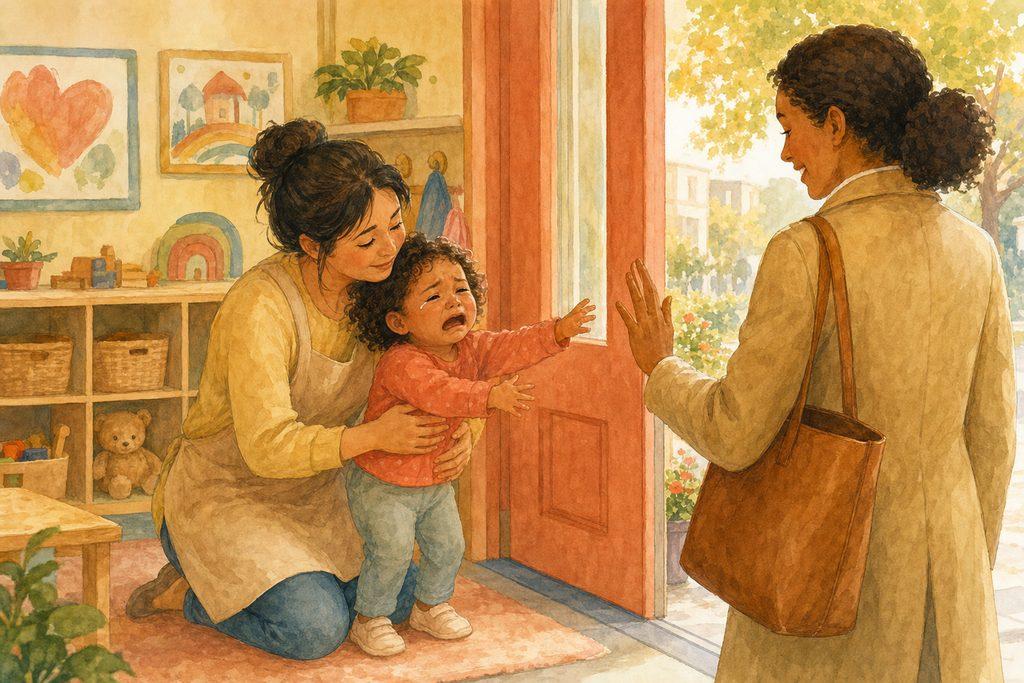
Separation anxiety usually peaks between about ten and eighteen months, then fades through the second half of the second year. So the toddler who wails at the daycare door every morning is right on the curve. The crying and clinging are normal and developmental — not a sign of a fragile child, and not a verdict on the daycare. [1, 11, 4]
Try this: A predictable goodbye ritual plus a confident, quick exit (both below) are what carry this stretch.
2 to 3: it eases
The fog lifts, for a tender reason.

As your child grows, their memory of you starts to comfort them while you’re gone — they can begin to hold you in mind even when you’re not there. That’s what quietly eases the worry: not that they stop loving you, but that they learn, over and over, that you always come back. [1, 7]
Try this: Keep the reunions reliable, and narrate the shape of the day: “after snack and the playground, I’ll be back.”
3 and up: a new start can bring it back
A flare at a transition is normal, not a regression.
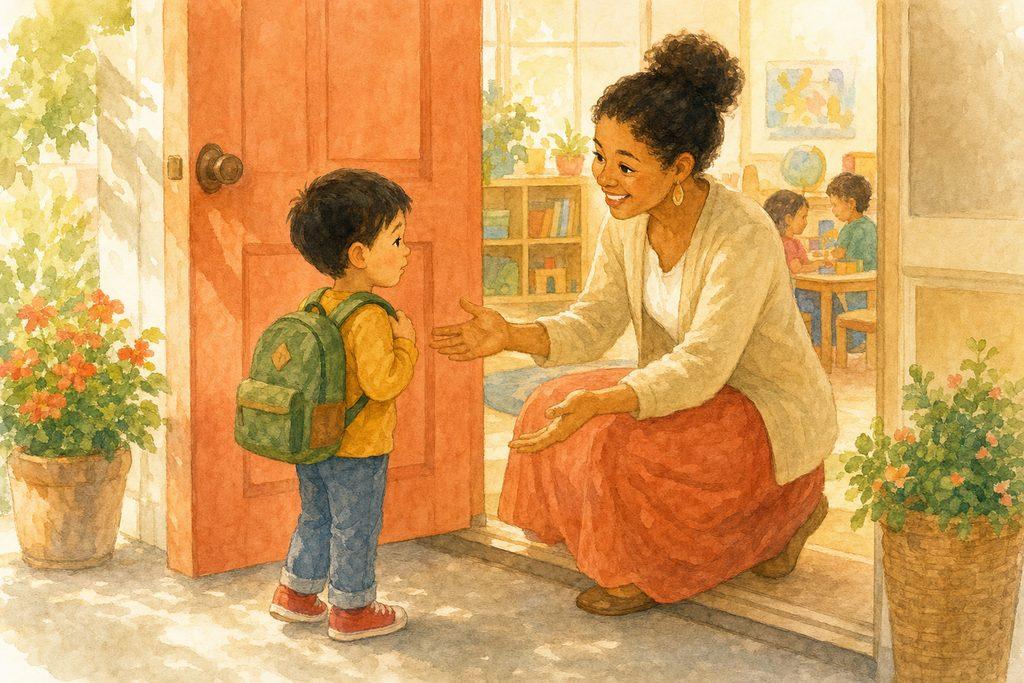
By the preschool years it’s rare for separation anxiety to show up every single day — but a big new start, like the first day of preschool, can bring the tears back for a while. That’s not your child sliding backward; it’s a new, unfamiliar thing meeting a child who feels deeply. It settles as the place becomes familiar. [5, 8]
Try this: Visit the new school together first, and read a warm “first day” story in the weeks before.
The goodbye that actually helps
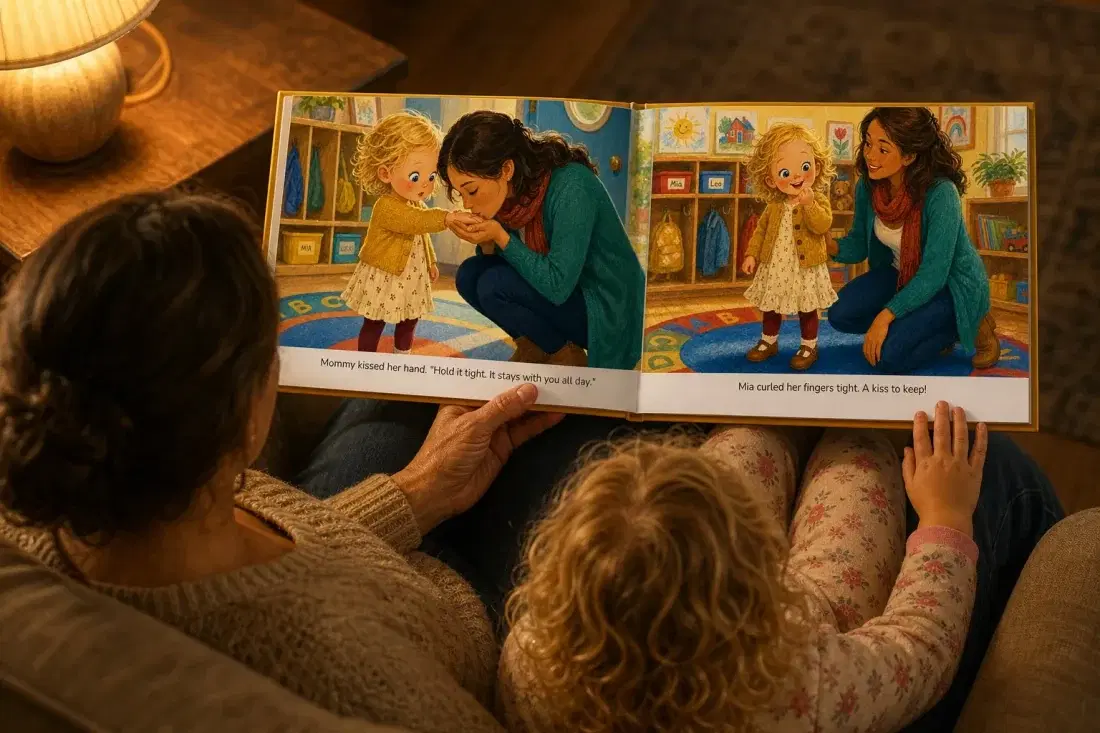
- Build a goodbye ritual, and do it the exact same way every single day — a kiss, a quick snuggle, a wave and a smile. The magic is the sameness: a predictable goodbye is one your child can trust. (A lovely version: press a kiss into their palm to “hold” all day.) [1, 6]
- Say goodbye — and then go. Quick and confident. Lingering at the door, or a long anxious goodbye, tells your child there’s something here to be afraid of. A short, warm, sure goodbye says the opposite. [6]
- Please don’t sneak out, even when it’s tempting. Slipping away while they’re distracted teaches a child that you might vanish at any moment — which makes the worry worse and chips at their trust that you come back. A real goodbye, even a teary one, is the kinder choice. [6]
- Send a lovey. Let your child pick a stuffed animal, a blanket, or a little family photo to carry — a small bridge from home to the new place. [8]
- Make it a hand-off, not a drop-off — then keep your promise about timing. Ask the teacher to greet your child and pull them into something fun right away, so there’s another warm adult the moment you go. Then come back when you said you would, every time. That dependable reunion is what fixes it, slowly — it teaches the most reassuring lesson there is: you always come back. [7, 6]
See how the story walks her through it
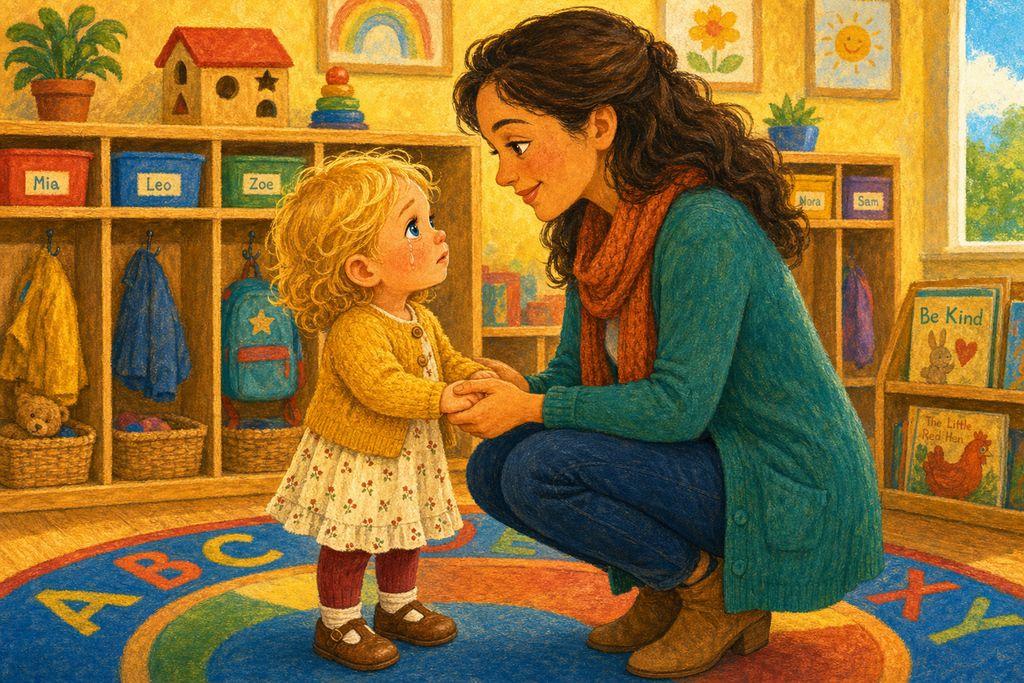
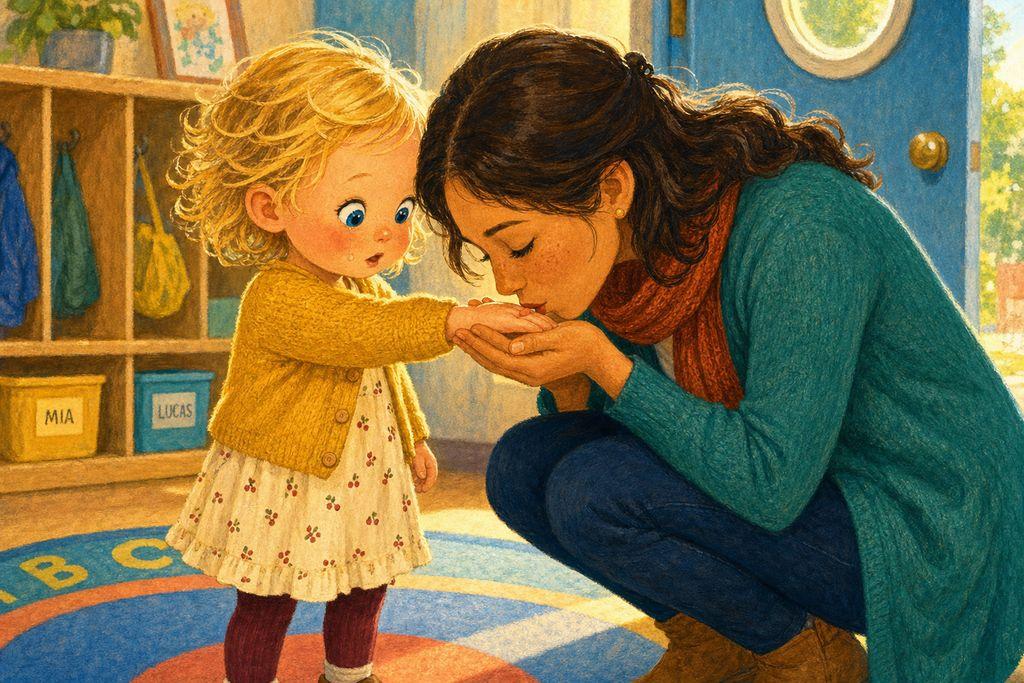
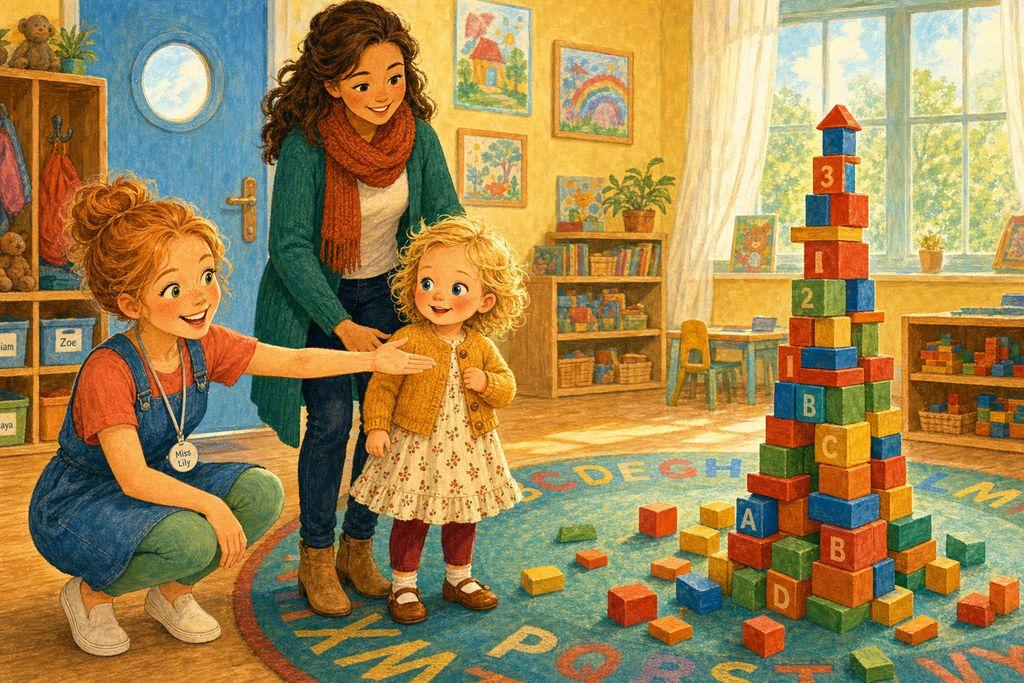
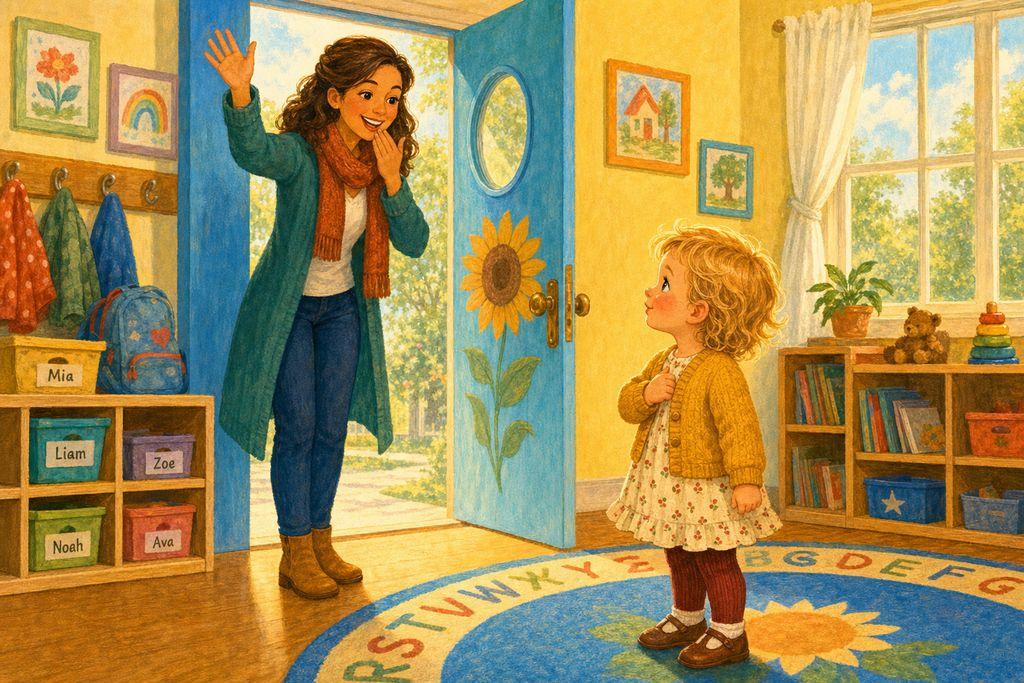
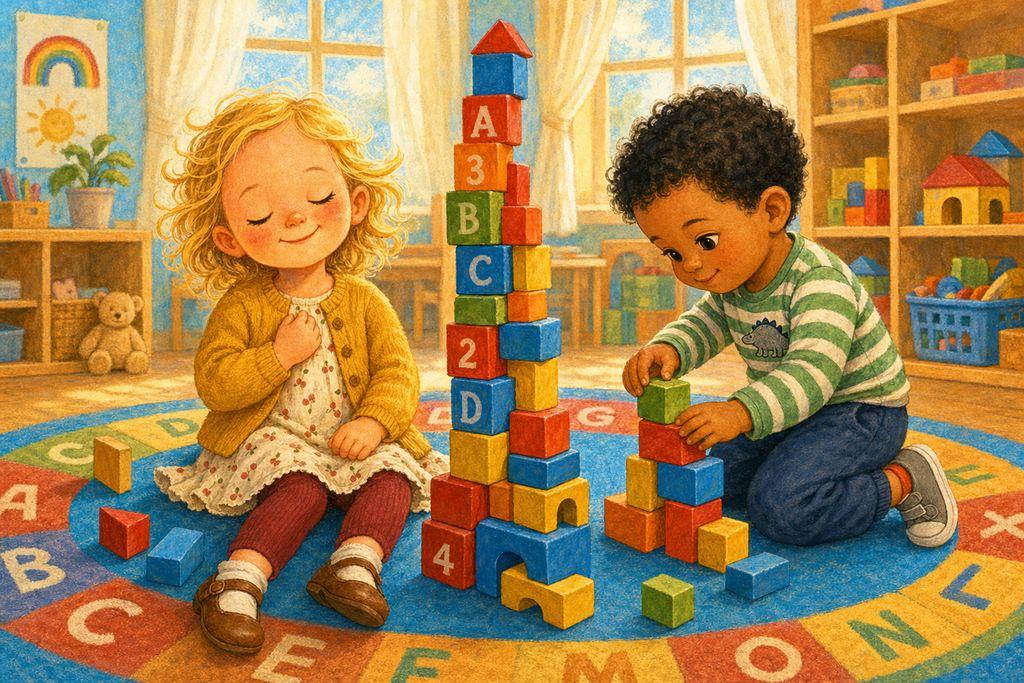

What this story is built to help with: A personalized storybook is the perfect way to deliver that comfort — your child as the hero who names the worry, leans on a goodbye ritual, and rehearses the most reassuring truth of all before they live it: you always come back.
Can a story actually help? (More than you’d think)
A “first day” story is a gentle rehearsal: a hero like your child does the scary new thing — the goodbye, the cry, the brave morning — before they ever have to live it. And it can hold two feelings on the same page: proud to be a big kid, and worried about leaving you. That “both at once” is exactly what a little one needs to see. [8, 9, 12]
There’s real research behind a book starring your own child: in a study of toddlers, families shared more smiles and more laughter with personalized books than with ordinary ones. A story gives your child the words and the ritual to practice — the brave goodbye, the kiss held in their hand, the dependable return — before the real moment at the door. And you make it land: the book and your steady goodbye, together, are the magic that helps it stick. [10, 7]
Quick answers
Is it normal for my toddler to cry every day at daycare drop-off?
Completely. It’s a developmental milestone, not a problem — and it eases as they grow. The tears are a sign of your bond, not a verdict on the daycare.
Should I sneak out to skip the tears?
No — it’s tempting, but it backfires. Slipping away teaches your child you might vanish anytime, which makes the worry worse. A quick, real goodbye is the kinder choice.
How long until it gets better?
Separation anxiety usually peaks around 10–18 months and eases through the second half of the second year, as your child learns you always come back. A big new start like preschool can bring it back briefly — also normal.
When should I worry?
Almost always, you don’t need to — everyday drop-off tears are textbook. But if the anxiety is extreme, lasts well past the preschool years, or keeps your child from everyday activities, your pediatrician is the right person to ask.
Who’s behind this
I’m Dao — a mom. I still remember the daycare drop-off when my daughter was two: the little hand on my leg, driving away with my heart in my throat. I make personalized storybooks where your child is the hero, because a story they’re in is the warmest way to practice the brave goodbye before the door.
Tell us the moment in a sentence or two, add a photo, and see them drawn as the hero.
Keep reading
- Kindergarten separation anxiety: the big-school goodbye
- The other side of the day: why your toddler falls apart after daycare
- See the full story: “Ava & Zoe Paint Magic” on Discover →
- Preschool separation anxiety: what’s normal at 2–5, and when to check in
- A personalized book for separation anxiety — how it actually helps
- Why I built PlotJoys — the night my daughter hugged the iPad
The research, if you want it
- American Academy of Pediatrics, HealthyChildren.org — “Soothing Your Child’s Separation Anxiety”
- American Academy of Pediatrics, HealthyChildren.org — “Emotional and Social Development: 8–12 Months”
- CDC, “Learn the Signs. Act Early.” — Milestones by 9 Months
- Child Mind Institute — “Separation Issues in Young Children”
- Child Mind Institute — “What Is Separation Anxiety?”
- American Academy of Pediatrics, HealthyChildren.org — “Making Baby Drop-Off at Child Care Easier”
- Zero to Three — “Separation Anxiety”
- Zero to Three — “Preschool Prep: Helping Toddlers Prepare for Preschool”
- Zero to Three — “Books About Feelings for Babies and Toddlers”
- Kucirkova, Messer & Whitelock (2013) — personalization and book engagement, Journal of Early Childhood Literacy
- StatPearls / NIH National Library of Medicine — “Separation Anxiety”
- American Academy of Pediatrics, HealthyChildren.org — “Shared Reading Starting in Infancy Offers Lifelong Benefits”