Starting School
Kindergarten Separation Anxiety: What’s Normal, What Helps

By Dao, Founder · PhD in mathematics, former Director of Data Science at Uber and Capital One · LinkedIn ↗
The short version
- “Did fine at daycare, falling apart at kindergarten” is a known, normal pattern — anxiety peaks at transition years, and kindergarten is the big one.
- The tears usually stop within minutes of you leaving. Ask the teacher how long it really takes — their report, not the goodbye scene, is the true signal.
- The goodbye that works is short, loving, and identical every day: ritual → “I’ll be back after story time” → hand-off to the teacher → leave. Never sneak out.
- Normal adjustment improves week over week. Severe meltdowns unchanged after 2–3 weeks, or a child who can’t recover or stay at school after 3–4 — that’s the calm check-in point, and it’s very treatable.
Kindergarten separation anxiety is normal — even in a kid who breezed through daycare — and it’s usually at its worst in the first few weeks, then fades. Kindergarten is a transition year, and worry spikes at transitions. Two facts to hold onto: the crying usually stops within minutes of you leaving — ask the teacher, their report is the real signal. And the tears mean healthy attachment, not damage. The playbook for the gate is below — and if severe meltdowns aren’t easing after two to three weeks, a calm check-in path too.
First, about the scene at the gate: the leg-cling, the teacher gently peeling him off, you holding it together until the car. Nothing about that scene means you did something wrong. The AAP calls separation tears a sign of meaningful attachment — the bond is working, not broken. And the daycare thing is real: kids who separated fine for years can wobble hard here. Kindergarten is a genuine transition — new building, new adult, new rules, all at once. It passes for most kids in a few weeks. Here’s what those weeks should look like, so you know you’re on track.
Part of our guide to social-emotional skills by age.
The first week: crying at drop-off, calm by circle time
The hardest week — for the kid at the gate and the parent in the car.
Week one tears are the rule, not the exception. Here’s what you can’t see from the parking lot: most kids calm down within minutes — Nemours puts it as “by the time you get to your car.” The goodbye scene is real, but it’s the trailer, not the movie. Your best information all week is the teacher’s report: does he settle quickly? Join the activity? [8, 6, 7]
Try this: Build the ritual on day one and never vary it: a hug, your special move, one line about when you’ll return in kid time — “I’ll be back after story time” — then hand him to the teacher and go. Short is kind: the AAP is blunt that if you linger, the hard part lingers too.
Weeks two and three: shorter storms, quicker recoveries
Not tear-free — trending easier. That’s the shape of normal.
Adjustment doesn’t mean the tears vanish; it means they shrink. Clinicians expect separation trouble to be “mostly a problem in the first few weeks,” improving as the routine becomes the new normal. Watch the trend, not the day: shorter protests, faster recoveries, a kid who talks about a classmate or the classroom fish. Setbacks after a weekend or a sick day are normal too — Mondays are re-entry, not relapse. [6, 1, 2]
Try this: Hold the ritual absolutely steady — same goodbye, same words, same time. Consistency is what turns the goodbye from a threat into furniture. Keep your own face confident — the calm is contagious, and it runs both directions. And resist the rescue: keeping him home for a “break,” or promising to come get him if the day goes badly, feels kind and reliably backfires.
Week four and beyond: mostly settled — or time for a calm check-in
By now the trend should be unmistakable. If it isn’t, here’s the honest path.
Most kids are through it by now: drop-off is routine, the ritual is quick, the fish has a name. If instead the meltdowns are still severe and unchanged — no improvement across weeks, a child who can’t recover or stay at school — that’s the point clinicians say to seek help. The bar for separation anxiety disorder is higher: symptoms most of the time, for at least four weeks, causing real problems in daily life. Even then, it’s very treatable — usually with CBT. [4, 3, 5, 8]
Try this: Start with the teacher — they’ve watched hundreds of adjustments and know what week four usually looks like. Then your pediatrician, calmly: describe the pattern (how often, how severe, how long to recover, whether it’s improving at all). Physical complaints — stomachaches, headaches before school — and outright refusal belong in that conversation too. None of this is a verdict on your child or your parenting. It’s a skill gap with a well-worn path to help.
The kindergarten drop-off playbook — scripts for the gate
- Build one goodbye ritual and never vary it. A hug, a pinky shake, a kiss pressed into the palm — then the same one line, every day. The AAP’s advice is “short and sweet”: the ritual is the container that makes the goodbye survivable, and sameness is the active ingredient. [6]
- Say when you’ll return — in kid time. Not “three o’clock” (meaningless at five) but “after story time” or “right after you play outside.” A pickup point on the day’s map gives the wait a shape. [8]
- Do the hand-off, not the peel-off. Walk him to the teacher, re-introduce them warmly, and let the teacher take over — their job is to fold him into an activity, not to discuss the tears. A child handed to a safe adult learns the parent’s exit isn’t a free fall. [7, 1]
- Wear your confident face. Kids read us like weather. If your goodbye says “this is safe, I’m sure,” he borrows that certainty; if it says “I’m not sure I should leave,” he borrows that too. Cry in the car — plenty of us have — just not at the gate. [7, 1]
- Send a piece of home in his pocket. A family photo card, a tiny lovey, whatever the school allows. Comfort objects genuinely work: in classic studies, kids with their lovey explored a strange new place as calmly as kids whose mother was in the room. And the AAP is clear — it’s not a sign of insecurity. [9, 10]
- Never sneak out — and never un-leave. Vanishing while he’s distracted teaches him to guard you instead of playing. And once you’ve said goodbye, go: coming back for one more hug re-opens the hardest moment and makes tomorrow’s harder. [7, 8]
See the “brave goodbye” story — starring your child



What this story is built to help with: The goodbye ritual, the piece-of-home in the pocket, and the reunion promise — the whole drop-off playbook, rehearsed as the hero of the story before the real gate.
Why a book where your child is the hero makes the goodbye easier
Here’s the problem with teaching the goodbye at the gate: the gate is the worst classroom in the world. Your child is flooded, you’re watched by forty parents, and the bell is ringing. The ritual has to be built earlier, somewhere calm. Experts point to exactly two rehearsal tools: practicing the goodbye before the real one, and stories where a child walks through the feeling first. A book is both at once. [6, 1]
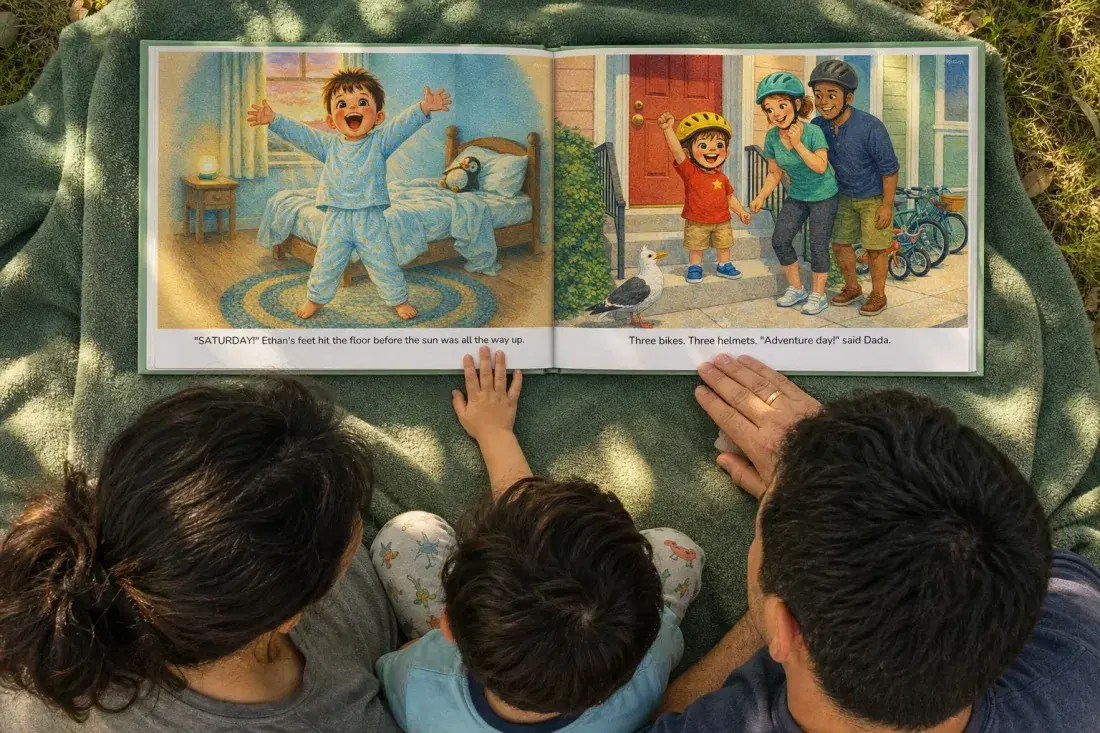
Now make the hero your child. When the kid on the page — his name, his face, his lovey — grips the straps, does the pinky shake, and finds the brave wave, your child rehearses the whole drop-off from the safest seat in the house: your lap. The comfort-object research even suggests why a book like this works double duty — it goes to school in the backpack as a piece of home. Read it twenty times in August, and the first-day goodbye arrives pre-practiced. The book plus you is what makes it land. [10, 9]
Quick answers
Is it normal for a 5-year-old to have separation anxiety?
Yes — especially at kindergarten start. Worry spikes at transition years, and kindergarten is the biggest one yet: new building, new adult, new rules, all in one morning. Even kids who separated fine for years can wobble here. It typically eases over the first few weeks as the routine becomes familiar.
My child cries at kindergarten drop-off every day. Am I doing something wrong?
Almost certainly not. The goodbye scene is the loudest sixty seconds of your child’s day — and usually the only sixty seconds you see. Most kids stop crying within minutes of the parent leaving. Ask the teacher two questions: how long does he take to settle, and does he join in after? If the answers are “quickly” and “yes,” the adjustment is working — no matter how the gate looks.
What do I do when my kindergartener says he doesn’t want to go to school?
Hear the feeling, hold the plan. “You wish you could stay home with me. School feels big right now. AND we’re going — I’ll walk you to Ms. Alvarez, we’ll do our pinky shake, and I’ll be back after story time.” Warm on the feeling, unmovable on the going. What backfires: staying home for a break, or promising a rescue pickup — both make every morning harder.
How long does kindergarten separation anxiety last?
For most kids: the first few weeks, improving week over week — shorter protests, quicker recoveries, then one day it’s just… drop-off. Expect brief flare-ups after weekends, holidays, or sick days; re-entry wobbles are normal all year. The pattern that matters is the trend.
When should I worry about kindergarten separation anxiety?
Clinicians offer concrete lines: severe meltdowns that haven’t eased after two to three weeks, or a child who can’t recover or stay at school after three to four. Start with the teacher, then your pediatrician — and know that even full separation anxiety disorder responds well to treatment, usually CBT. Asking early is care, not alarm.
Who’s behind this
I’m Dao — a mom, and the founder of PlotJoys. This company exists because of a goodbye: my own daughter, a daycare doorway, and a hug that neither of us wanted to end. I built her a story where she was the brave one — and watched the story do what my speeches couldn’t. The gate gets easier. A story where your child is the hero gets you there sooner.
Tell us the moment in a sentence or two, add a photo, and see them drawn as the hero.
Keep reading
The research, if you want it
- Child Mind Institute — “Back-to-School Anxiety” (Rachel Busman, PsyD: transition years, the contagion effect, test runs, the teacher hand-off)
- Child Mind Institute — “Starting Elementary School” (first-few-weeks timeline; don’t keep kids home for a break)
- Child Mind Institute — “How to Separate From Clingy Kids” (Stephanie Schwartz, PsyD: the several-weeks signal)
- Child Mind Institute — “Back-to-School and Work Anxiety” (the concrete 2–3 week / 3–4 week check-in thresholds)
- Child Mind Institute — “Quick Guide to Separation Anxiety Disorder” (the 4-week criterion; treatable, usually with CBT)
- HealthyChildren.org (American Academy of Pediatrics) — “How to Ease Your Child’s Separation Anxiety” (Wendy Sue Swanson, MD: quick goodbye rituals; same ritual, same time; tears stop within minutes)
- Nemours KidsHealth — “Helping Your Child Adjust to Preschool” (never sneak out; your confidence is contagious; the teacher re-introduction)
- Nemours KidsHealth — “Separation Anxiety” (the exit ritual; say when you’ll return in kid terms; when to talk to your doctor)
- HealthyChildren.org (AAP) — “Transitional Objects: Security Blankets & Beyond” (comfort objects reassure during separation and are not a sign of insecurity)
- Fortuna et al., Frontiers in Psychology (2014) — attachment-object research (children with their comfort object explored a new setting as calmly as children whose mothers were present, per Passman’s classic studies)
- HealthyChildren.org (AAP) — “Back-to-School Tips for Families” (visit the school before the first day; ask what they’re worried about and problem-solve)